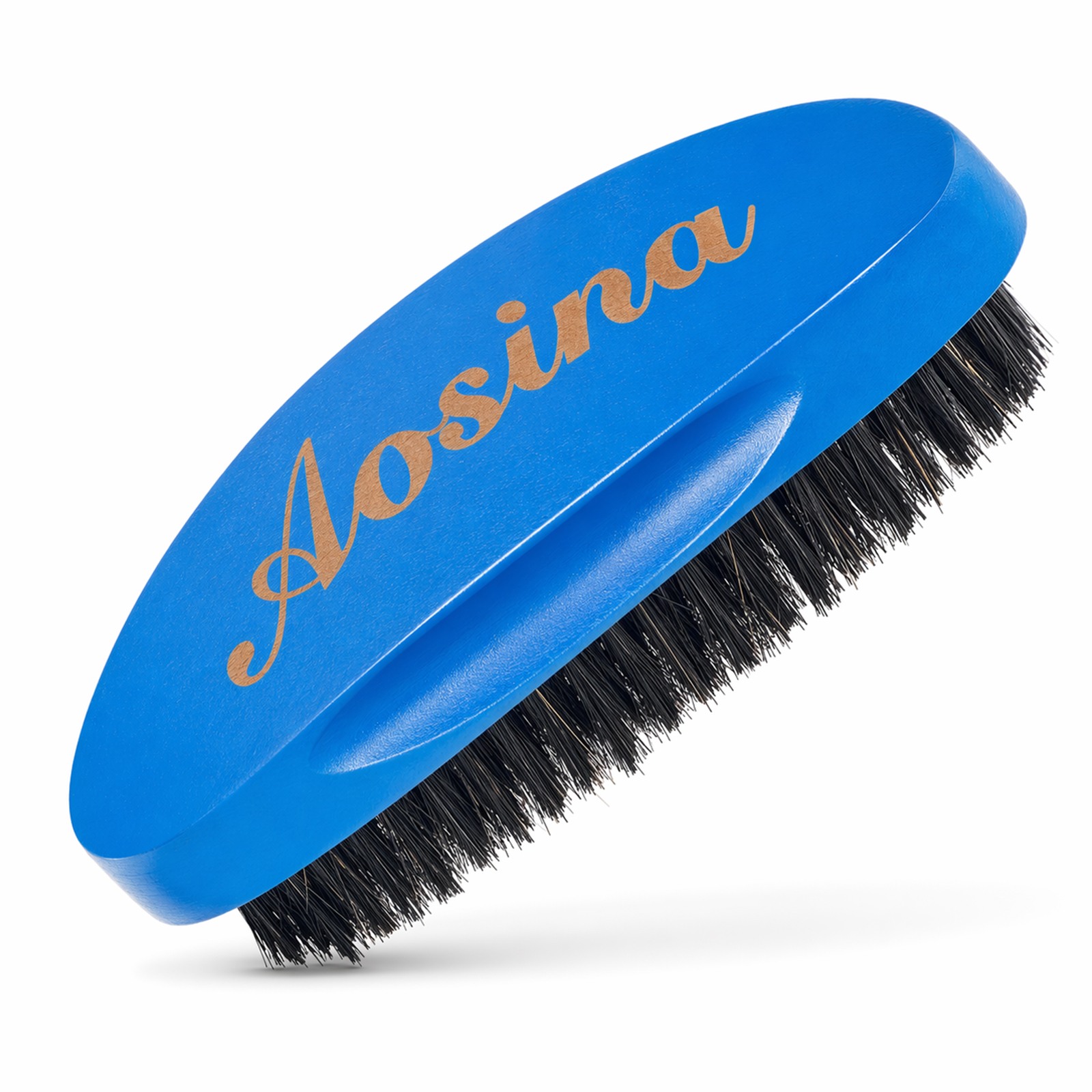
 Medium Hard
 Wave Brush for Wolfing, Thick and Coarse Hair
A medium hard wave brush — more pull than soft, less than hard. Built for wolfing, thick hair, coarse hair and 4C. Curved palm handle for control.
A soft wave brush with a wooden palm handle — for fresh cuts, short hair and beginner routines. See who it suits and when to move to a firmer brush.
Complete your purchase on Amazon.
For fresh cuts, shorter hair and light daily laydown. A soft brush keeps working after your hair grows out — use it to smooth the surface and finish the top of the head after a firmer brush does the main pass.
A soft wave brush is for short hair. That usually means the first one to two weeks after a haircut, when the hair is too short for a firmer brush to make comfortable contact with the scalp. It is also the sensible starting point if you are new to 360 waves and still learning your brushing pattern.
Soft bristles are not a “weaker” version of a firmer brush. They are a different tool for a different hair length. Trying to brush short hair with a hard brush does not speed anything up — it mostly creates friction and irritation.
As your hair grows out, you will notice the brush starts to feel like it is gliding over the hair instead of moving through it. That is the signal to step up. Most wavers move from soft to a medium or medium hard brush somewhere around weeks two to four, depending on how fast their hair grows.
You do not have to retire a soft brush once your hair is longer. Many wavers keep it in the rotation to smooth the surface and finish the top of the head after working through the hair with a firmer brush. A soft brush is a finishing tool, not just a beginner tool.
See when to step up: wave brush firmness guide
Rated 4.6 out of 5 from more than 1,680 Amazon ratings.
What buyers keep coming back to: it is gentle enough for a fresh cut and a sensitive scalp, it lays short hair down without pulling, and several use it as a beard brush as well. A few mention losing a couple of bristles in the first week, which is normal for natural boar bristle and settles once the brush is broken in.
“Excellent brush, soft bristles. Fits your hand well and brushes short hair beautifully.” — Verified Amazon review
“The wooden part of the brush fits nicely in the hand. The bristles are soft, but strong enough to guide the hair.” — Verified Amazon review
“The little comb is great for cleaning the brush, but it is also wonderful to comb the scalp for a delightful, tingly feeling.” — Verified Amazon review
Yes. It is the most common first brush because short hair is where most people start, and soft bristles are the most comfortable against a fresh cut.
Yes. It helps smooth the surface even when you prefer a firmer brush to work through longer or denser hair.
On short 4C hair, yes — comfort matters most right after a cut. As 4C hair grows, most people need to move to medium hard fairly quickly, because dense, tightly coiled hair needs more pull to be moved.
Roughly one to four weeks after a fresh cut, depending on how fast your hair grows and how dense it is. Switch when the brush stops making useful contact.
Medium HardA medium hard wave brush — more pull than soft, less than hard. Built for wolfing, thick hair, coarse hair and 4C. Curved palm handle for control.
 Hard
A hard wave brush with firm nylon bristles for stronger pull on thick, coarse and dense hair. For longer wolfing sessions and advanced wave training.
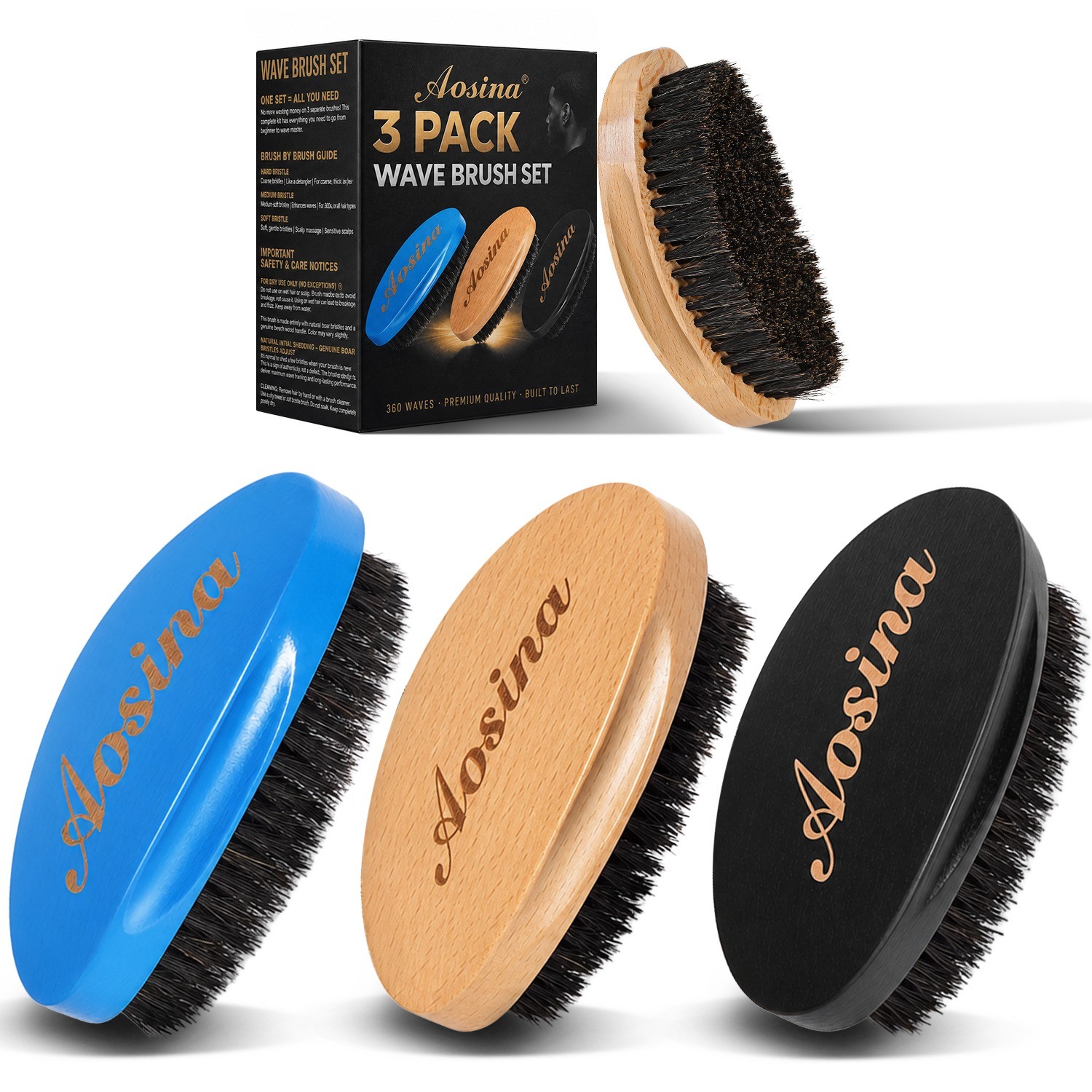 Mixed
A wave brush set (kit) with soft, medium hard and hard brushes. Change firmness as your hair grows — one kit for fresh cuts, training and wolfing.