Soft vs. Medium vs. Hard Wave Brushes: Which One Do You Need?
Firmness is the only decision that really matters when buying a wave brush. Here is how to match soft, medium hard and hard to your hair length, density and routine stage.
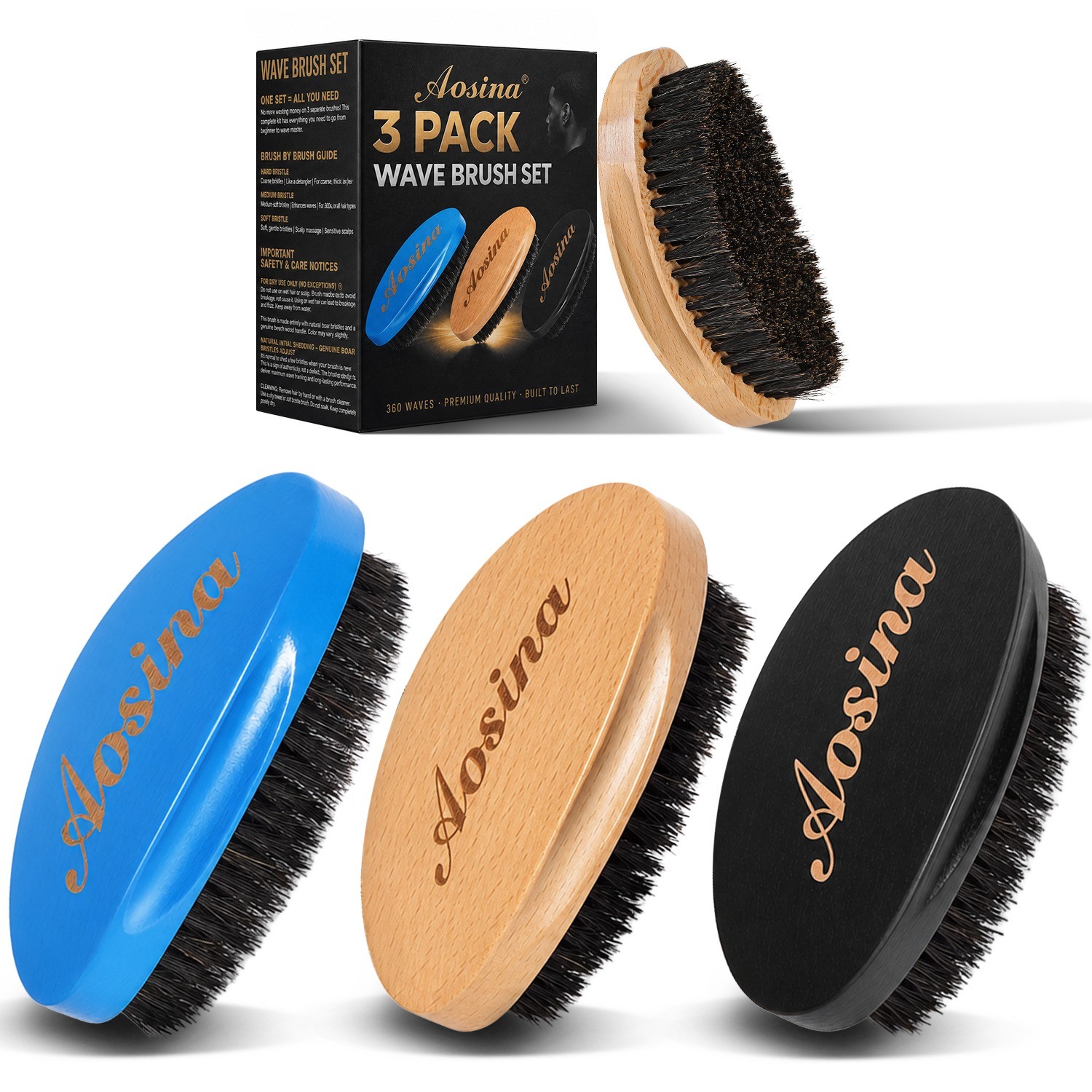
Choose the least firm brush that gives you useful, comfortable contact with your hair. If it glides over the surface without moving anything, go firmer. If it feels rough, drags or irritates the scalp, go softer. There is no firmness level that is universally “better” — and firmness matters far more than brand, because the only thing your hair responds to is how much pull the bristles put into it. Soft is a practical starting point after a short haircut and for light surface smoothing. A medium brush is a general middle category; AOSINA’s Medium Hard is a specific, firmer option in this range.
A quick firmness comparison
| Brush option | When it may fit | What to check |
|---|---|---|
| Soft | Fresh cuts, shorter hair, light finishing | Does it smooth your hair with a light touch? |
| Medium (general category) | An in-between everyday feel | Firmness labels vary across brands; medium is not a standardized rating. |
| AOSINA Medium Hard | Longer or dense hair when a softer brush skims the surface | Does it provide the contact you want without making you press? |
| AOSINA Hard | Longer, dense hair when you prefer a firmer brushing feel | The AOSINA model uses nylon bristles; it may be too firm for a fresh cut. |
Is medium the same as AOSINA Medium Hard?
No. “Medium” describes a broad category used by brush brands; it does not identify a separate AOSINA product in the current range. AOSINA’s product is named Medium Hard. Do not assume it feels identical to a medium brush from another brand, or that every medium-hard brush has the same stiffness. Bristle material, length and construction can all affect the feel.
Think of Medium Hard as an option to evaluate when your softer brush no longer gives enough useful contact. The name is a guide, not a reason to tolerate an uncomfortable brushing feel.
See the AOSINA Medium Hard Wave Brush
Start with the hair you have today
- After a short cut: try Soft with light pressure before considering anything firmer.
- As your hair grows: notice whether the bristles still work through your hair or only skim over it.
- If your brush still feels effective and comfortable: keep using it. More firmness is optional.
- If you want more contact: try a firmer option gently instead of pressing harder with the brush you have.
Hair length, density and your preferred brushing feel matter together. Coarse hair does not automatically require the hardest brush. There is no universal haircut guard number or week of wolfing that tells everyone to switch.
Read the guide to choosing a brush during wolfing
Where Soft and Hard fit
Soft can be your main brush at shorter lengths and a finishing brush later. During a longer-hair stage, its role may be light surface smoothing after you use another brush for your main pass.
Explore the AOSINA Soft Wave Brush
The AOSINA Hard Wave Brush has nylon bristles. Choose it for the firmer feel when that fits your current hair—not because nylon or a “hard” label guarantees a better wave pattern. Do not read one model’s bristle material as a description of the full range.
Check the AOSINA Hard Wave Brush details
Choose by hair length
| Hair length | What the hair does | Firmness to use |
|---|---|---|
| 0–2 weeks after a cut | Short, close to the scalp, easy to move | Soft |
| 2–5 weeks | Starting to thicken, a soft brush begins gliding | Medium Hard |
| 5 weeks and beyond (wolfing) | Long enough that a lighter brush no longer reaches through | Medium Hard, or Hard if you press noticeably to make contact |
| Right after a fresh cut, mid-wolfing reset | Back to short | Back to Soft for the first week |
Notice that the answer changes twice within a single growth cycle. That is normal — and it is the reason a three-brush set exists at all.
Decide whether a brush set fits your routine
Choose by hair type
| Hair type | What it needs | Firmness |
|---|---|---|
| Fine, straight to slightly wavy | Easier to bend; too much pull causes friction fast | Soft, sometimes Medium Hard as it grows |
| Medium thickness, wavy | Middle of the range | Medium Hard |
| Thick and coarse | Needs more pull to make contact through the hair | Medium Hard |
| 4B / 4C, tightly coiled and dense | Needs the most pull to move at all | Medium Hard, moving to Hard as length increases |
| Straight hair trained for waves | Resists holding a bend; needs moisture more than firmness | Soft to Medium Hard, with extra moisturising |
A common misunderstanding is that tightly coiled hair needs the hardest brush available. It usually needs more pull than fine hair — and more patience — but the comfort test still applies. If a hard brush drags or hurts, medium hard is the better tool even on 4C.
Choose by routine stage
| Stage of your routine | Purpose | Firmness |
|---|---|---|
| Working pass — right after moisturising | Move the hair into your direction | Medium Hard (or Hard for longer, heavier hair) |
| Finishing pass — end of session | Smooth the surface, lay the pattern flat | Soft |
| Overnight compression | Hold the direction while you sleep | Not a brush — use a durag or wave cap |
| Wolfing phase | Train through extra length | Medium Hard as the baseline, Hard for heavier passes |
This is how most people end up using more than one brush — not because they need a collection, but because one session has two different jobs.
Signs you are using the wrong firmness
- The brush glides over the top of your hair without moving it — go firmer. This is the most common signal, and it usually appears two to three weeks after a cut.
- The brush drags, catches or feels rough — go softer. Firmness should feel controlled, not abrasive.
- Your scalp is sore or tender after brushing — you are either using too firm a brush, pressing too hard, or brushing too long. Reduce all three before changing anything else.
- You see more breakage or shedding than before — too much pressure, too dry hair, or both.
- The pattern has stopped developing despite consistent brushing — check length and moisture first, then firmness.
What about bristle material — nylon or boar?
Material changes the feel, but firmness changes the function. A soft boar brush and a hard nylon brush are not comparable at all, because they are doing different jobs. Decide firmness first, material second.
If a shop cannot tell you what the bristles are made of, be careful about what else it claims. We state nylon where a brush uses nylon, and we do not assign a bristle material to brushes where we cannot confirm it. That is a deliberate choice, not an oversight.
Do you need more than one brush?
Not to start. One brush that matches your current hair length is enough to begin a routine. Two brushes become genuinely useful when your hair grows through more than one firmness level between cuts, when you want a distinct working pass and finishing pass, or when you are still finding out which firmness your hair responds to.
That third case is exactly what a three-brush set is for. It is a choice of tools, not a promised outcome.
Compare the AOSINA 3-Pack Wave Brush Set
Where to buy each firmness
Buy for the length you have now, not the length you are growing toward: soft for the first week or two after a cut, medium hard for the main working stretch, and hard once the hair is long and dense. The three-brush set covers all three if you would rather not shop again mid-cycle.
Buy the AOSINA Soft Wave Brush on Amazon
Buy the AOSINA Medium Hard Wave Brush on Amazon
Buy the AOSINA Hard Wave Brush on Amazon
Buy the AOSINA 3-Pack Wave Brush Set on Amazon
Frequently asked questions
Will a harder brush make waves faster?
Firmness alone does not guarantee speed or results. The useful choice is the brush you can control comfortably through your current hair. Pressing harder is not a shortcut.
Do I need all three firmness levels?
Not necessarily. One brush can be enough if it suits your current length and routine. Several options are convenient when your needs change between a fresh cut, growth and finishing.
Decide whether a brush set fits your routine
Which should I use right after a haircut?
For a short cut, start with Soft and a light touch. Check how it feels before adding pressure or switching brushes.
See the fresh-haircut brushing guide
Which brush should a beginner buy first?
Soft, because most people start with a fresh cut. If you would rather not buy again in three weeks, a set with all three firmness levels covers the whole growth cycle.
Can I use one brush for my whole routine?
Yes. Many people do. If you do, choose the firmness that matches the middle of your growth cycle, and accept that it will feel light right after a cut and heavy at the end of wolfing.
How do I know when to move up a firmness level?
When the brush starts gliding over the surface of your hair instead of moving through it. That usually happens two to three weeks after a cut.
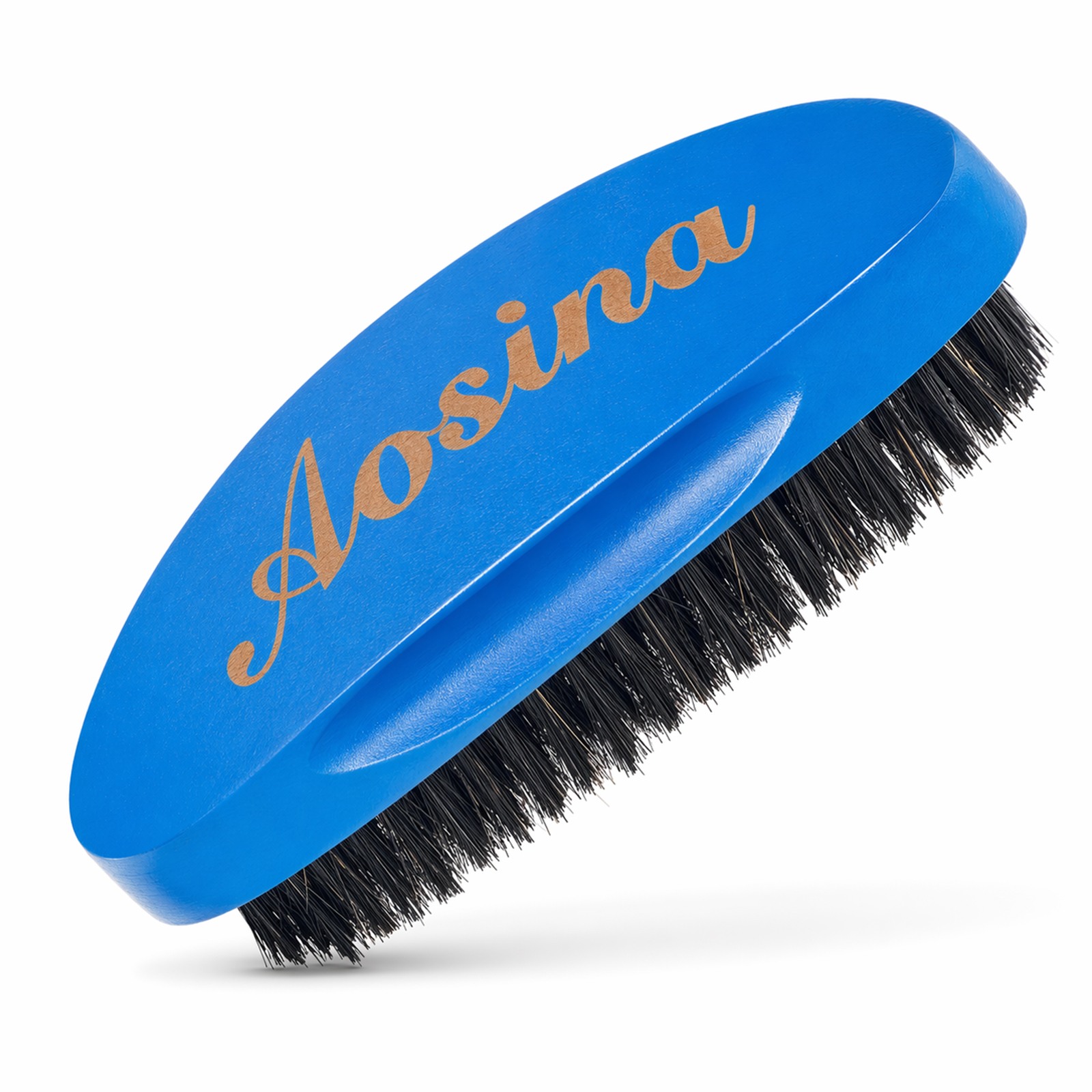 Medium Hard
 Wave Brush for Wolfing, Thick and Coarse Hair
A medium hard wave brush — more pull than soft, less than hard. Built for wolfing, thick hair, coarse hair and 4C. Curved palm handle for control.
Related reading
Wave TroubleshootingCrown Brush Pattern: Why the Swirl Is the Last Section to Close
The crown is where hair direction changes inside one brush width, so normal strokes skip it or fight it. How to find your whirl, the stroke pattern that lays it down, and where to stop.
Read article →BRUSH BASICSCurved vs. Flat Wave Brush: Which Shape Actually Fits Your Head
A curved body and a flat body put pressure on your scalp in different ways. Where each shape helps, where it fights you, and the four checks that tell you in two weeks.
Read article → BRUSH CARE
How to Clean a Wave Brush with a Wooden Handle
Remove loose hair first, keep the wooden handle out of standing water, and let the brush dry in moving air. Avoid soaking or unconfirmed cleaning treatments.
Read article →BRUSH BASICS7-Row vs 9-Row Wave Brush: Which One Fits Your Head and Hair
Rows describe how wide a band of hair one stroke covers, nothing more. Who a 7-row brush suits, who a 9-row suits, and the four checks that tell you which one your head and hands actually want.
Read article →