4C Hair Waves: The Complete Brush and Routine Guide
4C hair is the tightest, densest texture in the 4-type range, and that changes the routine: more pull, more moisture, more time. Here is what actually works.
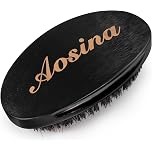
The short answer: yes, 4C hair can hold 360 waves. The pattern does not require a looser curl pattern — it requires the hair to bend in a consistent direction often enough that it starts to stay there. What 4C hair changes is the effort: tightly coiled, dense hair needs more pull to move, more moisture to stay flexible, and more time before the pattern holds. Most people with 4C hair should plan on months, not weeks, and on consistency rather than intensity.
Why 4C hair behaves differently
4C hair is the tightest and most densely packed texture in the 4-type range. Two practical consequences:
It resists being redirected. The strands coil tightly and spring back, so a light pass with a soft brush mostly slides over the surface. You need firmer bristles to put meaningful tension into the hair.
It loses moisture quickly. Tight coils make it harder for natural oils to travel down the strand, so 4C hair tends to feel dry and brittle sooner than looser textures. Dry hair does not bend and hold a new shape nearly as well as moisturized hair — which is why moisture is not an optional extra in a 4C routine. It is half the routine.
Neither of these is a defect. It just means the routine has to be built for the hair you actually have.
What 4C hair needs that other textures need less of
- **More pull.** Firmer bristles, because soft bristles cannot move dense, coily hair effectively.
- **More moisture, more often.** A daily light moisturizing step, and a real conditioning routine on wash days.
- **More length before the pattern reads.** 4C hair often needs a little more growth before waves become visible on the surface.
- **More patience between cuts.** Each fresh cut resets the training, so people with 4C hair benefit from longer stretches between cuts and a firm plan for the first week after each one.
Firmness for 4C hair: where to start, when to move up
The rule stays the same as for every hair type — use the least firm brush that still gives you useful, comfortable contact — but 4C hair pushes that starting point firmer.
| Stage | Firmness | Why |
|---|---|---|
| Right after a cut (first week or two) | Soft | The hair is short and close to the scalp. A firm brush mostly scrapes; a soft brush makes comfortable contact. |
| 2 weeks to end of growth cycle | Medium Hard | This is the working brush for most 4C routines. Enough pull to actually move dense hair, still controllable. |
| Long, thick growth, or when medium hard starts gliding | Hard | Firm nylon bristles for stronger tension when a medium hard brush no longer reaches through the hair. |
| Finishing pass, end of any session | Soft | Smooths the surface and lays the pattern flat after the heavier passes. |
A common mistake is jumping straight to a hard brush because 4C hair "needs the strongest brush". It usually does not — a hard brush on a fresh cut mostly creates friction and irritation. Start at the stage you are actually in.
Buy the AOSINA Medium Hard Wave Brush on Amazon
Buy the AOSINA Hard Wave Brush on Amazon
Buy the AOSINA 3-Pack Wave Brush Set (Soft, Medium Hard & Hard) on Amazon
A realistic 4C brushing routine
This is a framework, not a prescription — adjust the time to what your scalp tolerates comfortably.
1. Moisturize before you brush. Damp or lightly moisturized hair moves; dry hair snaps and sheds. Do not brush 4C hair that feels brittle.
2. Work in sections, not circles. Start at the crown and brush outward toward your hairline in one direction. Every stroke in the same direction reinforces the pattern; random strokes undo it.
3. Use light, consistent pressure. You are looking for contact, not force. If your scalp is sore after a session, the pressure or the duration is too much.
4. Split the session into two passes. A firmer brush for the working pass to move the hair, then a soft brush to smooth the surface and finish.
5. Compress afterwards. A durag or wave cap holds the direction while the hair dries and sets. Without compression, 4C hair springs back toward its natural coil and much of the session's work is lost.
6. Stay consistent rather than long. Shorter, regular sessions beat occasional marathon sessions. Consistency is the variable that actually moves the timeline.
See how the three firmness levels compare
How long it takes with 4C hair
Anyone giving you an exact number is guessing. What can be said honestly:
- **First signs of a pattern:** often 3 to 6 weeks of consistent work, sometimes longer for very dense hair.
- **A pattern that reads clearly on the surface:** commonly 2 to 4 months.
- **Waves you are happy with:** frequently 4 to 8 months, and the timeline resets somewhat after every fresh cut.
The range is wide because it depends on your density, your growth rate, how much of the work is moisture and compression rather than brushing, and how consistent you are over months rather than days.
Common mistakes people with 4C hair make
- **Brushing dry hair.** The single most common cause of breakage and stalled progress.
- **Brushing harder instead of consistently.** More force does not speed up a pattern; it irritates the scalp and damages hair.
- **Skipping compression.** A durag or wave cap is not optional if you want the direction to hold.
- **Using a soft brush for months past the point it stopped working.** If the brush glides over the surface, it has stopped doing anything.
- **Cutting too often.** Every cut resets the length the pattern needs.
- **Judging progress by other people's photos.** Hair density and growth rate differ far more than internet timelines suggest.
If your hair is not 4C
4B, 4A and other coily textures. The same principles apply with slightly less effort. Medium hard is still a sensible baseline; you may find you can stay on a softer brush for longer, or move up later.
Straight or fine hair. Straight hair can be trained into waves too, but it resists holding a bend and springs back faster, so moisture and compression matter even more. Straight and fine hair usually stays comfortable on soft to medium hard firmness, and gets more benefit from leaving a little length and being patient than from a firmer brush.
If you are not sure what your hair type is: it does not change what you do. Pick firmness by length and by how the brush feels through your hair, then adjust. The comfort test works for every texture.
Frequently asked questions
Can 4C hair get 360 waves?
Yes. Waves come from repeated directed brushing plus moisture and compression, not from curl pattern. 4C hair needs more pull, more moisture and more time, but the method is the same.
What is the best wave brush for 4C hair?
Medium hard is the most practical working brush for most 4C routines: firm enough to move dense, coily hair, controllable enough to use consistently. Use a soft brush right after a cut, and move to a hard brush only if medium hard stops making contact.
Should I use a hard brush for 4C hair?
Only when your hair has length and a medium hard brush glides over the surface instead of moving it. A hard brush on a fresh cut or an irritated scalp creates friction, not progress.
How often should I brush 4C hair?
Consistency matters more than duration. Short, regular sessions — daily if your scalp tolerates it — work better than occasional long ones. Split the time between a firmer working pass and a soft finishing pass.
Can I get waves with 4C hair without a durag?
You can brush without one, but the pattern will not hold nearly as well. Compression while the hair sets is what keeps the direction you brushed in.
Where to go next
How to Get 360 Waves: Step-by-Step Beginner's Guide — the full routine from day one.
Medium Hard vs Hard Wave Brush for Wolfing — what to change during longer growth.
Best Wave Brush for Black Men: A Firmness Guide — how to pick firmness by hair length.