Best Wave Brush for Black Men: A Firmness Guide
"Best" depends on your hair length today, not on the brand on the handle. Here is how to match firmness to coarse, dense and tightly coiled hair — and what to buy first.
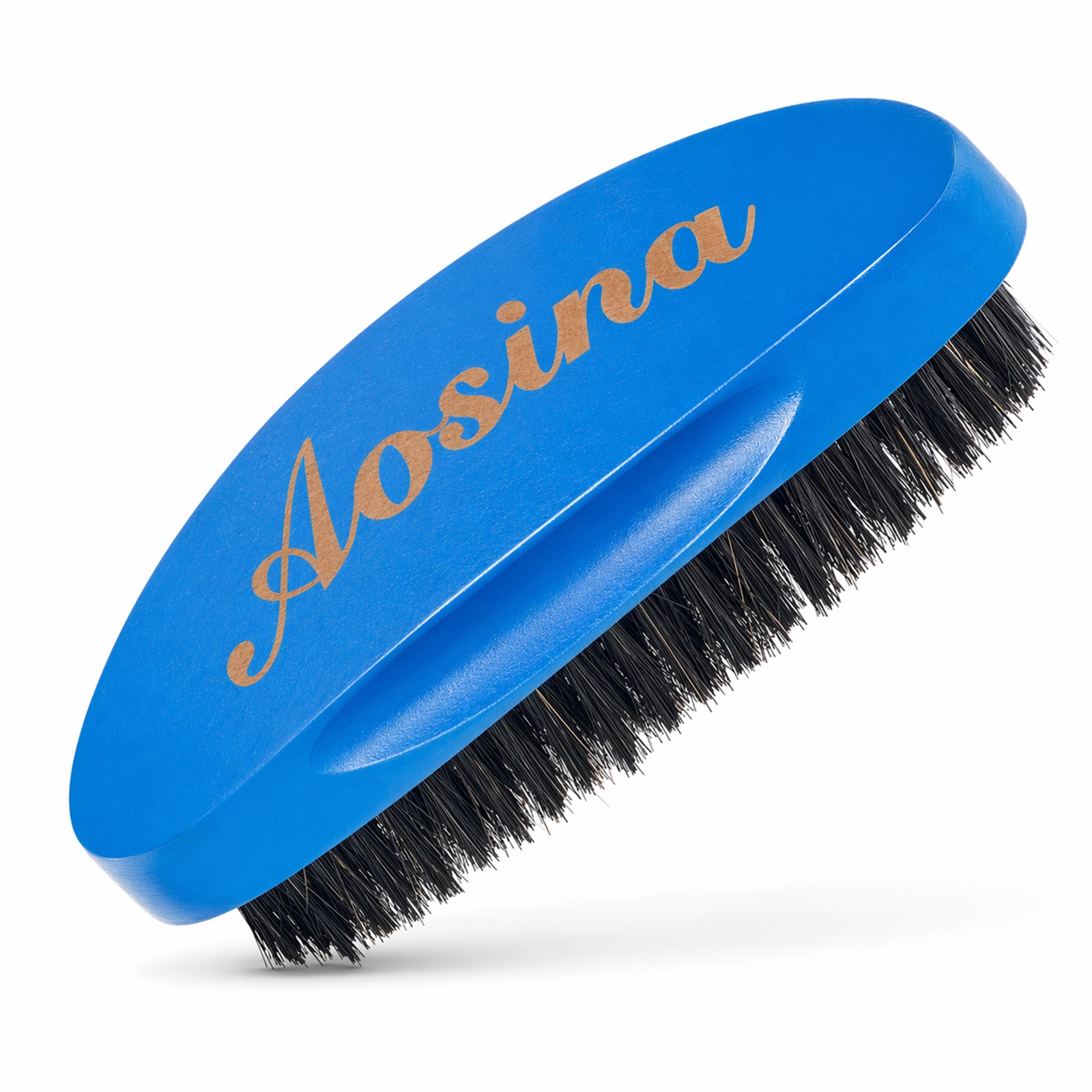
The short answer: there is no single best wave brush, because the right brush depends on how long your hair is right now, how dense it is, and how much pull you need to move it. For most men with thick, coarse or tightly coiled hair, the practical answer is: soft for the first week or two after a cut, medium hard as your main working brush once the hair grows out, and hard only when a medium hard brush starts gliding over the hair instead of moving it. If you would rather not buy twice, a three-brush set covers the whole growth cycle.
Buy the AOSINA 3-Pack Wave Brush Set (Soft, Medium Hard & Hard) on Amazon
Anyone who gives you a single brand name as "the best" is skipping the only question that actually matters: what does your hair need at this length?
Why "best" is the wrong question
A wave brush has one job: put controlled pull into your hair so it bends in a consistent direction. The amount of pull you need changes as your hair grows. A brush that works well three weeks after a cut can be too aggressive two days after a cut, and the same brush can be too light six weeks in.
So "best" is not a fixed product — it is a match between bristle firmness and your hair length today. That is why firmness matters more than brand, price or how the brush looks in a photo.
What your hair type actually changes
Thick, coarse and tightly coiled hair (common in 4A to 4C textures) usually needs more pull than fine or straight hair, because the hair resists being moved into a new direction. This is not about "tougher hair" — it is simply about how much force it takes to make the strands bend and stay where you put them.
Two things follow from that:
- Lighter textures often stay comfortable on soft or medium firmness for longer.
- Coily, dense textures usually end up on medium hard as their baseline, simply because a light brush glides over the surface without doing much.
Equally important: more force is not more progress. A brush that drags, scratches or makes your scalp sore is not "working harder" — it is creating friction you will pay for later in irritation and breakage.
Firmness by hair length — the part most guides skip
Hair length matters more than hair type, and it changes constantly between cuts. Use this as your starting point:
| Hair length | What the hair does | Firmness to start with |
|---|---|---|
| 0–2 weeks after a cut | Short, close to the scalp, easy to move | Soft |
| 2–5 weeks | Thickening up; a soft brush begins to glide | Medium Hard |
| 5 weeks and beyond (wolfing) | Long enough that a lighter brush no longer reaches through | Medium Hard, or Hard if you press noticeably to make contact |
| Right after a fresh cut mid-wolfing | Back to short all over again | Back to Soft for the first week |
Notice that the answer changes twice inside one growth cycle. That is normal, and it is the reason a set exists at all.
Compare the AOSINA 3-Pack Wave Brush Set
Where each AOSINA brush fits
We make four products, and each one exists for a specific stage rather than for a specific "level" of waver. There is no beginner brush and no advanced brush — only a brush that matches your hair today.
Soft — for fresh cuts and short hair. This is the brush for the first days after a cut, when a firmer brush cannot make comfortable contact with the scalp. It is also useful later in your routine as a finishing pass to smooth the surface after working through the hair with something firmer.
Buy the AOSINA Soft Wave Brush on Amazon
Medium Hard — the working brush for most people. Once your hair has grown past a fresh cut, this is the firmness that does the actual training for most coarse and dense hair. It gives you meaningful pull without the drag of a very firm brush, which is why it tends to become the default in a routine.
Buy the AOSINA Medium Hard Wave Brush on Amazon
Hard — for long, thick, dense hair. Firm nylon bristles for stronger brushing tension. This is the choice when medium hard no longer makes useful contact, or for heavier passes during a long wolfing stretch. It is not the "better" brush, and it is not the right first brush for a fresh cut or an irritated scalp.
Buy the AOSINA Hard Wave Brush on Amazon
The 3-Pack — if you already know your needs will change. Buying all three firmness levels at once means you are not shopping again in the middle of a growth cycle, and you can feel the difference between them yourself instead of guessing from a product photo.
What to check before you buy any wave brush
- **Firmness you can actually verify.** If a listing cannot tell you how firm the bristles are, it cannot help you match a brush to your hair. Skip it.
- **Bristle material, stated honestly.** Nylon, boar and mixed bristles feel different and last differently. A seller who will not say what the bristles are made of is likely to be vague about everything else.
- **A handle shape you can grip while brushing the back and crown.** Palm-style handles exist because you need control in areas you cannot see.
- **Reviews that mention hair texture and length.** "Great brush" tells you nothing. "Worked for my 4C hair at week three" tells you a lot.
- **Honest claims.** No brush produces waves on its own. If the marketing promises a pattern in a week, the product will not deliver it.
Do you need more than one brush?
No — not to start. One brush that matches your current length is enough to begin a routine, and many people stay with a single brush and simply accept that it feels light right after a cut and heavy at the end of a growth cycle.
Two brushes become genuinely useful when your hair grows through more than one firmness level between cuts, when you want a clear working pass and finishing pass, or when you are still finding out what your hair responds to. That third case is exactly what a three-brush set is for: it is a choice of tools, not a promised outcome.
Frequently asked questions
What is the best wave brush for black men?
Medium hard is the most common working brush for thick, coarse or tightly coiled hair, because it gives useful pull once the hair has grown past a fresh cut. Right after a cut, start with soft, and move up to hard only if medium hard stops making contact.
Is a hard brush better for 4C hair?
Not automatically. Tightly coiled, dense hair needs more pull than fine hair, but the test is still comfort and useful contact. If a hard brush drags or hurts, medium hard is the better tool even on 4C. Many people use medium hard as the main brush and hard only for heavier passes.
Do I need a wave brush set, or can I buy one brush?
One brush is genuinely enough if it suits your current hair length and stays comfortable. A set makes sense when you know your needs will change as your hair grows, or when you want to compare firmness levels yourself.
Are expensive wave brushes worth it?
Price usually buys handle material, bristle quality and how long the brush holds its shape — not better results. Since firmness is what your hair responds to, a correctly matched affordable brush beats a badly matched expensive one.
How often should I replace a wave brush?
Replace it when the bristles soften, splay or stop holding a consistent shape, or when the handle loosens. Worn bristles cannot give you consistent tension, and consistency is what builds a pattern.
Where to go next
How to Get 360 Waves: Step-by-Step Beginner's Guide — the routine that does the actual work.
Medium Hard vs Hard Wave Brush for Wolfing — what to change during a long growth stretch.