How to Get 360 Waves: A Beginner's Step-by-Step Guide
360 waves are a pattern built from repeated brushing, moisture and compression. Here is the full beginner routine, how to brush in a pattern, and how long it realistically takes.
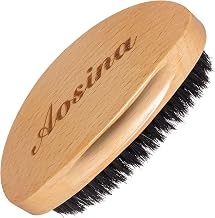
The short answer: 360 waves are a hair pattern you build, not a style you get in one session. They come from three things working together — consistent brushing in a fixed pattern, enough moisture for the hair to bend instead of break, and compression between sessions (usually a durag or wave cap). Brushing harder does not speed this up. Brushing consistently does.
Most people see the first signs of a pattern within two to four weeks of a steady routine. How long it takes to get waves you are genuinely happy with depends on your hair type, your cut length and how consistent you are — a realistic range is covered further down.
What are 360 waves?
360 waves are a pattern of connected ripples that run around the head, starting at the crown and working outward. "360" refers to the pattern going all the way around rather than sitting in one section.
Two things make the pattern happen:
1. The hair has to be short enough to train. Waves form when the hair bends over itself at the root. If the hair is too long, it lays down instead of bending into a ripple.
2. The direction has to be repeated. Waves are a habit the hair learns. Every brushing session in the same direction reinforces the pattern; brushing in random directions works against you.
That is the whole concept. Everything below is just how you apply it.
What you actually need
You do not need a shelf of products. You need a small set of things you will actually use every day:
- A wave brush that matches your current hair length. This is the piece people get wrong most often — see how to choose your firmness.
- A way to moisturise your hair. Dry hair bends poorly and breaks more easily. Whatever you use, it needs to be light enough that it does not sit heavy on your scalp.
- A durag or wave cap. Compression is what holds the pattern between sessions, especially overnight.
- A conditioner or co-wash for your routine washes. Clean hair trains better than coated hair.
- A barber who understands you are growing waves. A cut that is too short resets your training every time.
If you are starting from zero, this is exactly what the beginning of a routine looks like — not a collection, just the tools for one job.
Your daily routine, step by step
Step 1 — Start with clean, moist hair
Waves train best on hair that is clean and lightly moisturised, not soaked and not dry.
Wash with a gentle cleanser and condition. Then, while the hair is still slightly damp, work a small amount of your moisturiser through it. You are aiming for hair that is soft enough to bend — if your hands come away greasy, you have used too much.
A useful rule: less product, more often. A heavy application once a week does less than a light one most days.
Step 2 — Brush in your pattern
This is the core of the routine, and the part worth slowing down on.
Start at the crown and brush outward, following the direction the hair already wants to go. Work section by section — top, sides, back — rather than scrubbing the whole head at once. Short, controlled strokes with light pressure beat long, hard ones.
How long should you brush? For a beginner, ten to fifteen minutes in one session, once or twice a day, is a workable starting point. Longer is not automatically better: past a certain point you are creating friction on the scalp without adding anything to the pattern.
Step 3 — Compress and protect
When you finish brushing, put your durag or wave cap on. If you are doing your main session in the evening, this is what the pattern holds onto overnight.
The durag should be snug enough to keep the hair flat and in direction, but not tight enough to leave marks or pull at your hairline. If you wake up with a headache or a sore hairline, it is too tight.
Step 4 — Repeat, and keep the length right
Waves are a consistency game. A short session every day beats a long session once a week, and skipping a week costs you more than a single long session can recover.
Keep an eye on length too. The routine that works two days after a cut is not the routine that works three weeks later — both your brush firmness and your brushing time usually need to increase as the hair grows.
Brush pattern, angles and direction
If your pattern is not developing where you expect, it is usually one of these three things:
| Problem | What it usually means | What to change |
|---|---|---|
| Waves forming in patches, not connecting | Brushing is not following one consistent direction | Pick your crown as the centre and brush outward from it every session, the same way each time |
| Pattern strong at the top, weak at the sides and back | The sides and back are getting less brushing time | Deliberately spend the first few minutes on the sides and back before moving to the top |
| Hair lays flat instead of rippling | Hair is too long, or too dry, or both | Take the length back slightly and increase moisturising frequency |
| Scalp feels sore or tender | Too much pressure or too long a session | Reduce pressure and shorten the session; comfort is a signal, not an obstacle |
One more thing worth saying plainly: a harder brush is not a shortcut. If your brush feels like it is gliding over the hair rather than moving through it, the answer is a firmer brush — not the hardest brush. See Wave Brush Firmness Guide.
How long does it take to get 360 waves?
This is the most-searched question about waves, and the honest answer is that it depends mostly on your hair type and how consistent you are. As a rough guide for someone brushing once or twice a day:
| Your hair | First visible pattern | Connected waves | Deeper, defined waves |
|---|---|---|---|
| Fine to medium, straight-ish | 2–4 weeks | 1–2 months | 3–6 months |
| Medium thickness, wavy | 3–6 weeks | 2–3 months | 4–8 months |
| Thick, coarse, tightly coiled (4B / 4C) | 4–8 weeks | 3–4 months | 6–12 months |
Three caveats that matter more than the table:
1. Thicker and more tightly coiled hair takes longer to train, but usually holds a deeper pattern once it forms. Slow early progress is not a sign you are doing it wrong.
2. Every too-short haircut restarts part of the process. If your barber keeps cutting you back to the same length, you are training the same two weeks over and over.
3. Missed days cost more than good days gain. Two weeks of daily brushing followed by a week off is roughly where you started.
Common mistakes that slow you down
- Brushing with too much pressure. Friction on the scalp does not build pattern. Irritated scalps train worse, not better.
- Choosing the hardest brush immediately. Firmness has to match your hair length. A brush that is too firm for a fresh cut is not an upgrade.
- Skipping moisture. Dry hair resists bending and breaks more easily. Moisture is not optional.
- Sleeping without a durag. You spend a third of the day with the hair free to move in any direction.
- Washing too often with a harsh shampoo. Stripping the hair every day makes it harder to keep moisturised and trainable.
- Changing direction every session. Waves are a learned direction. Consistency is the whole mechanism.
- Giving up at week three. That is usually right before the pattern starts showing.
Where to buy the brush you need
Start with the firmness that matches your hair length today — soft for a fresh cut, medium hard for the main stretch, hard for long, dense hair. If your length changes a lot between cuts, the three-brush set covers the whole cycle.
Buy the AOSINA Soft Wave Brush on Amazon
Buy the AOSINA Medium Hard Wave Brush on Amazon
Buy the AOSINA 3-Pack Wave Brush Set on Amazon
Frequently asked questions
How often should I brush my hair to get 360 waves?
Once or twice a day is the common starting point, with ten to fifteen minutes per session. Consistency across weeks matters more than the length of any single session.
Can I get 360 waves with straight hair?
Yes, but it takes longer and needs more moisture, because straight hair resists holding a bend. You will usually also need to keep the length shorter during the training phase.
Is it too late to start if I am older?
No. The routine is the same. What changes with age is hair density and growth rate, which affects timing rather than whether it works.
Do I need a hard brush to get waves?
No. Most people progress from soft to medium hard as the hair grows, and many never need a hard brush at all. Choose by hair length and comfort — see the firmness guide.
Why are my waves not connecting?
Usually because the brushing direction changes between sessions, or because the sides and back are getting less attention than the top. Pick a consistent direction and cover the whole head evenly.
Should I brush on wet or dry hair?
Slightly damp, lightly moisturised hair is the usual recommendation. Soaking wet hair is more fragile, and completely dry hair does not bend easily.
Where to go next
Find Your Brush — compare the three firmness levels side by side
Wave Brushes — the four AOSINA brushes
How to Clean a Wave Brush with a Wooden Handle — keep your brush working properly