3 Brush Wave Kit: What Each Brush Does and When to Use It
Each brush in a three-brush wave kit does a different job: Medium Hard carries the daily sessions, the pure boar Soft brush finishes and handles fresh cuts, and the stiff nylon Hard brush is built for wolfing and coarse hair.
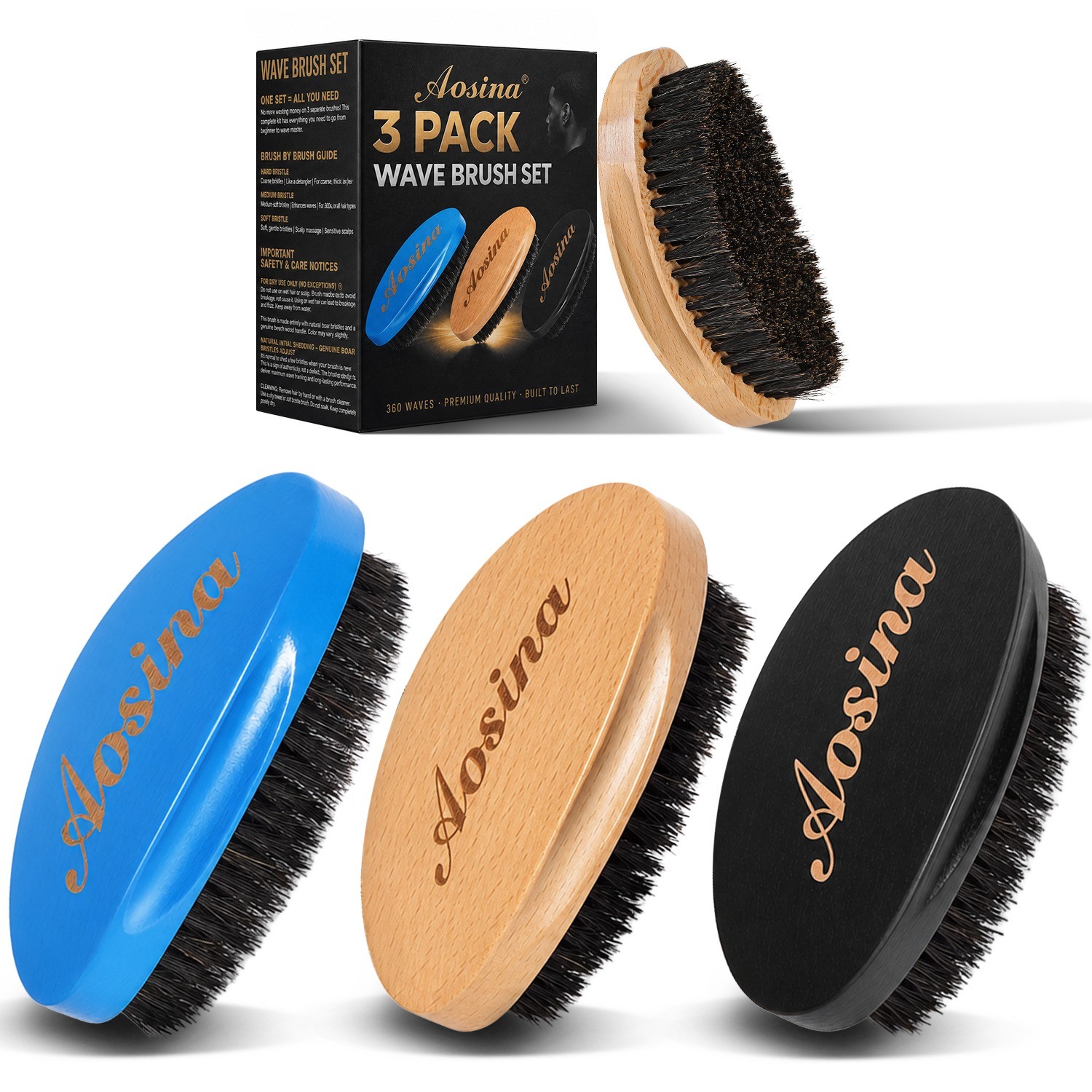
A three-brush wave kit can look like a marketing bundle until you understand the logic behind it: the three firmness levels are not three copies of the same job, they are three different jobs. In the AOSINA set, the soft brush is 100% pure boar, the middle brush is a boar-and-nylon blend called Medium Hard, and the firmest is 100% nylon. Each one earns its slot at a different point in your routine. This guide walks through what each brush is actually for, how long each one tends to stay in rotation, the brush most guys leave unused, and how to use all three without brushing more than your hair can handle.
What a 3 brush wave kit actually gives you
A set does not triple your work. It splits one job into three smaller ones. Most brush confusion comes from asking a single brush to do everything: lay down a fresh cut, pull longer hair into a pattern, and polish the surface without irritating your scalp. Those are three different demands, and no single firmness handles all of them equally well.
The table below is the whole guide in one view. Everything after it just fills in the details.
| Brush | Bristles | Main job | Where it struggles |
|---|---|---|---|
| Soft | 100% pure boar | Light smoothing, finishing passes, fresh short cuts | Pulling through thick, longer growth |
| Medium Hard | Boar and nylon blend | Daily main passes at most lengths | Deep work on very coarse, long wolfing growth |
| Hard | 100% nylon | Wolfing phases and thick, coarse hair | Beginner hands that press too hard |
One note before the details: the middle brush in the AOSINA set is called Medium Hard, not Medium. The name matters, because a listing that only says medium could mean almost anything, while this blend sits in a specific spot between soft boar and stiff nylon.
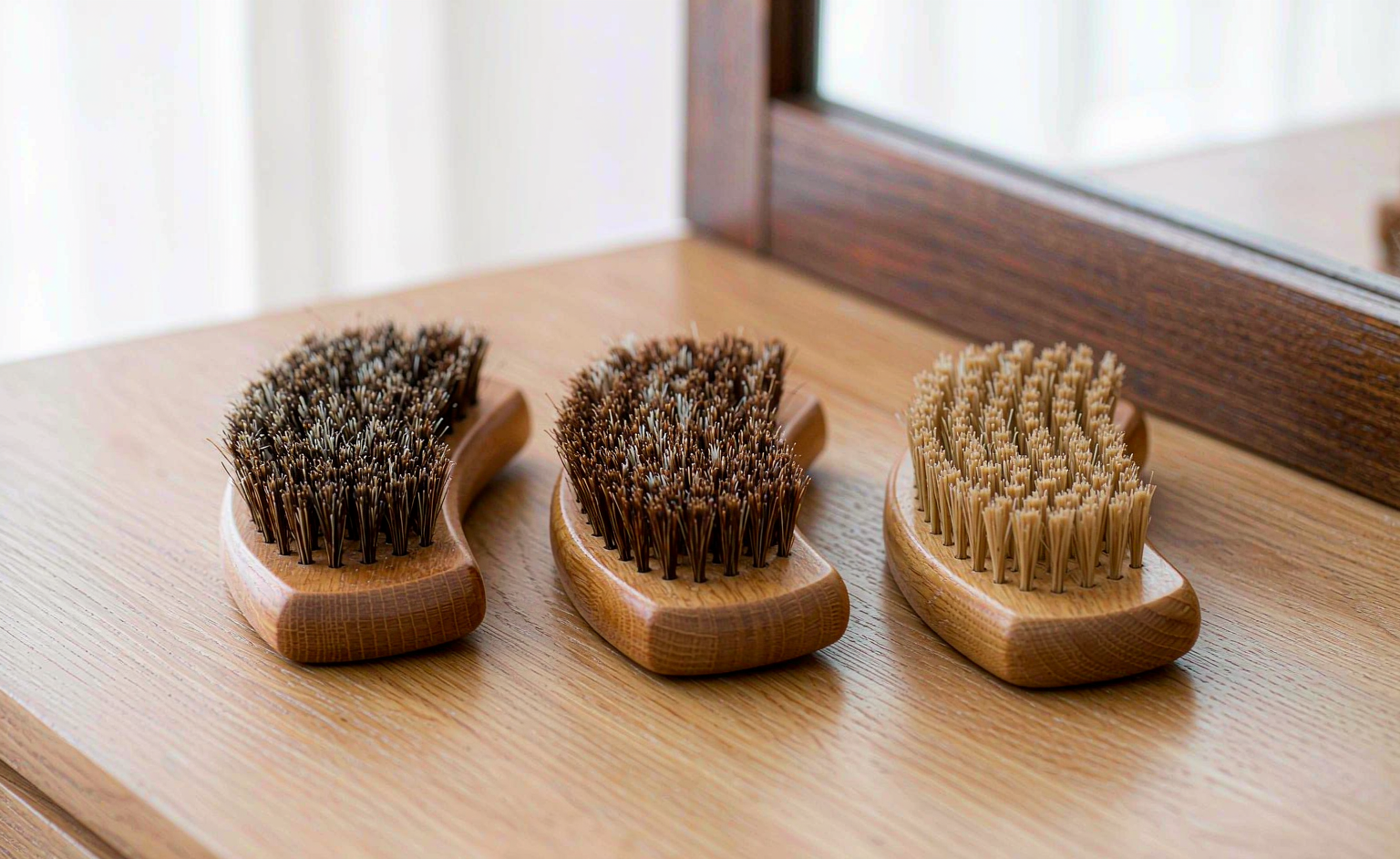
Medium Hard: the daily main brush
Medium Hard is the brush that should collect the most minutes in your week at almost any stage. The boar-nylon blend gives it enough grip to move hair at short-to-medium lengths, while the boar side keeps the pass from feeling like plastic dragging across your scalp. If you only ever pull one brush out of the set, this is the one.
Use it for your main sessions: crown, sides, and back, working outward from the crown in the pattern you are training. It also handles the awkward in-between phase well, when your cut has grown past what a soft brush can grip but has not reached the length where a hard brush feels appropriate.
It is not a finishing brush. Long, low-pressure passes with Medium Hard will move hair, but the surface finish at the end of a session usually comes out cleaner with the soft brush. That division of labor is the whole point of owning the set.
Soft: pure boar for finishing passes and fresh cuts
The soft brush in the set is 100% pure boar bristle, and its job is contact and polish, not force. Boar bristles are finer and denser to the touch, so they glide over the surface and pick up short, freshly cut hair that a stiff brush tends to skip past.
Reach for it in three situations. First, right after a fresh cut, when your hair is too short for the blend or the nylon to catch properly. Second, at the end of a session, when a few light finishing passes smooth the surface the main brushes just worked. Third, on days when your scalp feels irritated, a soft session keeps the habit alive without adding friction your head is not asking for.
What it will not do is pull long, coarse growth into place. If your hair has some length and the soft brush feels like it is sliding over the top of it, that is your signal to hand the job to the Medium Hard.
Check the AOSINA Soft Wave Brush on Amazon
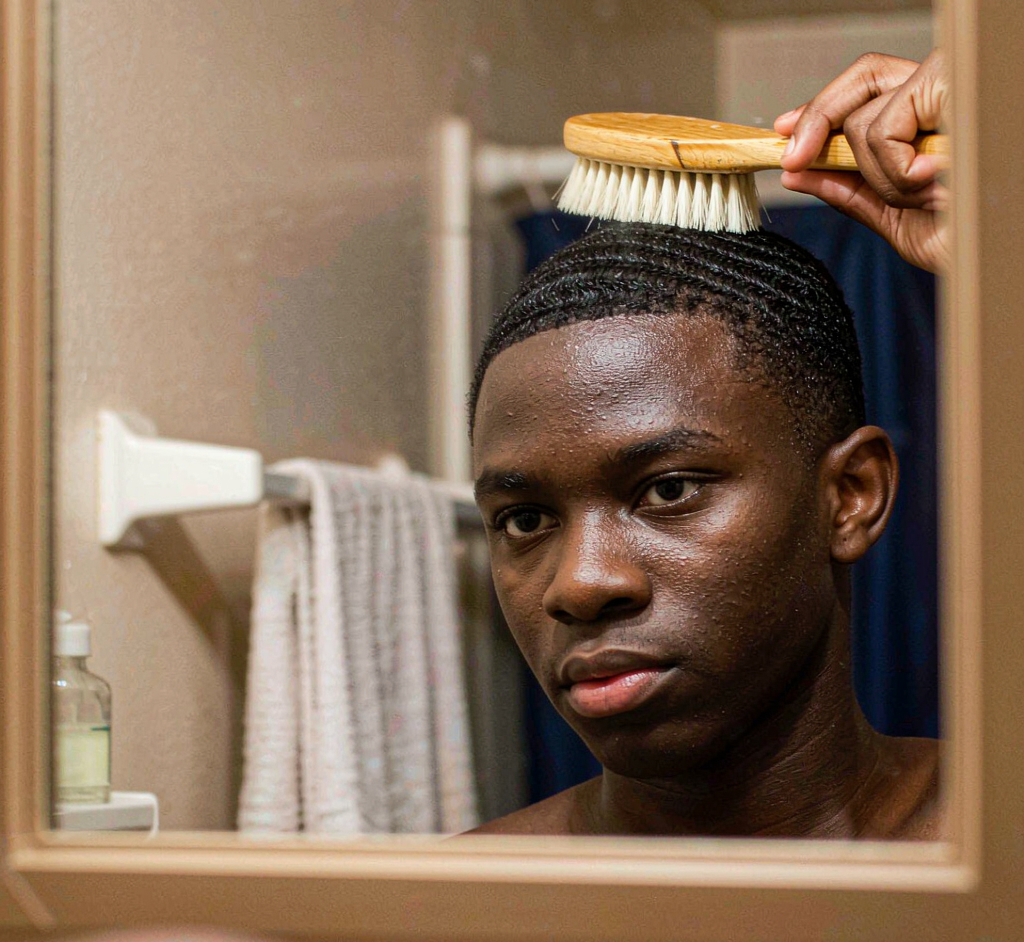
Hard: 100% nylon for wolfing and thick, coarse hair
The firmest brush in the set is 100% nylon, and it exists for one main reason: hair that the other two cannot move. During a wolf, when you are growing your hair well past a normal cut, the extra length and density can simply overwhelm a boar or blend brush. The stiff nylon gets into that growth and keeps the pattern from going soft at the back and sides.
The mistake to avoid is pressing harder to make it work faster. A hard brush already delivers more contact per stroke than your scalp is used to, so the technique is more passes with light pressure, not heavier hands. If your scalp is sore afterward, that is feedback, not progress.
Most guys with average hair density do not need the hard brush every day, and some rarely need it at all. Thick, coarse hair is where it earns permanent shelf space. If you are unsure which side you fall on, treat it as a wolfing tool first and an everyday brush never.
How long each brush stays in your rotation
None of the three brushes is permanent full-time staff. Each one rotates in as your hair length and phase change.
- Fresh cut weeks: the soft brush does most of the work, with short Medium Hard sessions once the brush starts catching hair instead of sliding over it.
- Steady training at short-to-medium length: Medium Hard takes over as the main brush, and the soft brush drops to a finishing role in the last minutes of a session.
- Wolfing, or thick coarse growth: the hard brush rotates in for the deepest work, usually a few focused minutes rather than your whole session.
- Back to a short cut: rotate the hard brush back out. Keeping it in the rotation after a cut is how scalps get sore for no reason.
The rotation is driven by your hair, not by the calendar. If the brush you are using feels like it is either skating over your hair or digging into your scalp, the length has changed and a different brush from the set is now the right tool.
The brush most guys leave sitting in the box
In most sets, the hard brush is the one that sits unused the longest, and honestly, that is often fine at the start. Beginners hear that harder means faster results, force a few aggressive sessions with the stiffest brush, and end up with a sore scalp and no extra progress to show for it. Fear of repeating that keeps the brush in the box well past the point where it would have been useful.
The quieter mistake happens at the other end: the soft brush gets retired early. Once hair gains some length, soft-brush sessions can feel pointless, so guys stop entirely. But that is exactly when its low-friction finishing passes matter most, on a surface that finally has real pattern to protect. Both brushes end up in the drawer for habit reasons, not because your hair stopped needing them.
Can you use all three in one day without over-brushing?
Over-brushing is not caused by owning three brushes. It comes from total friction: minutes of brushing, pressure, and how much irritation your scalp collects, added up across everything you do. Using three brushes sensibly can be gentler than hammering one brush for an hour.
A balanced way to split a single session: most of your minutes on the Medium Hard, moving hair in your pattern; a short, focused stretch on the hard brush only when you are wolfing or working coarse growth; and a minute or two of light soft-brush passes to finish. Between all three, keep the total time in the same range you would spend with one brush.
The signals that you have crossed your limit are the same no matter how many brushes you own: a scalp that stays tender, and hair that feels stressed rather than trained. The over-brushing guide lists those warning signs in detail. If they show up, cut total time first and brush count second.
See the signs you are over-brushing your waves
When the set is worth it, and when one brush is enough
Be honest about the alternative: one Medium Hard brush covers a large share of this guide for most people at a steady short cut. You do not need the set to get waves, and any page that pretends otherwise is selling, not advising.
The set earns its price in a few situations. If your routine swings between fresh cuts and longer growth, you will use all three firmness levels within a couple of months. If your hair is thick or coarse, the hard brush stops being optional once you start wolfing. And if you are buying for someone else - a son, a boyfriend, a father - the set removes the guesswork of picking a single firmness for hair you do not live with every day.
If that describes you, the AOSINA 3-Brush Wave Set covers all three roles with one purchase:
Buy the AOSINA 3-Brush Wave Set on Amazon
If you would rather grow into the set, start with the Medium Hard alone and add the soft brush once finishing passes start sounding useful:
Buy the AOSINA Medium Hard Wave Brush on Amazon
For a deeper look at what separates the three firmness levels, the comparison guide breaks down what Medium Hard means next to soft boar and stiff nylon:
Compare Soft, Medium Hard and Hard wave brushes
And if you have not chosen anything yet, the hub guide walks through choosing a wave brush from scratch:
Finally, brushes are only part of the routine. The tool kit guide covers everything else a wave kit needs beyond bristles, so this page stays focused on the brushes themselves:
Related reading
BUILD YOUR ROUTINE360 Waves Tool Kit: Brush, Durag, Pomade and More
Half the "wave kits" on sale are padding. Here is the short list of tools that actually do something for your pattern — and the order to buy them in.
Read article → Wave Troubleshooting
Why Do My Waves Look Frizzy After Brushing?
Waves looking puffy after a brush session? Check pressure, firmness, direction and finishing before changing your whole routine.
Read article →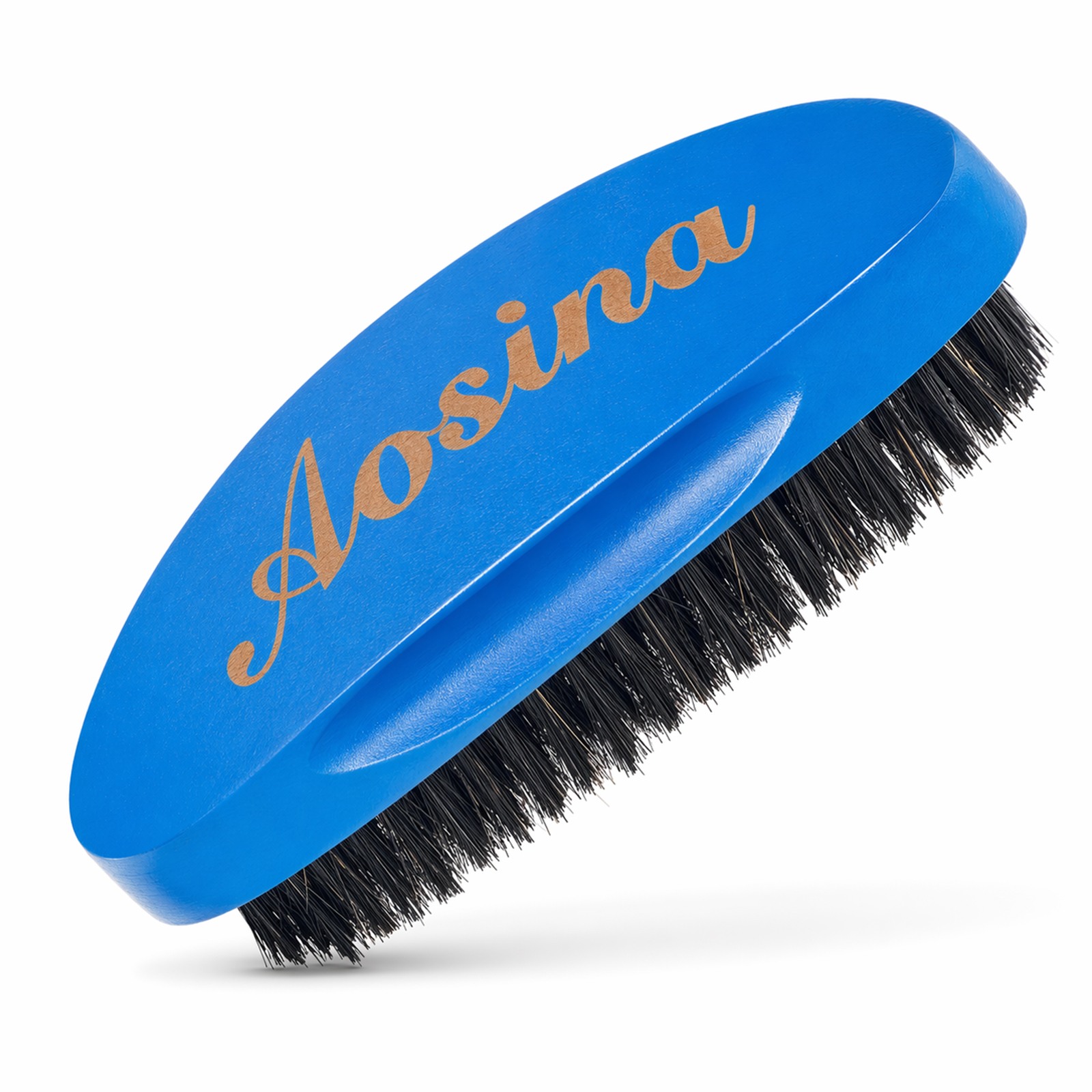 CHOOSING A BRUSH
What Is a Medium Hard Wave Brush? Definition and Where It Fits
Medium Hard names a specific construction: boar and nylon bristles blended in one head. This page defines it, explains why the middle ground exists, and shows who it fits.
Read article → WOLFING · COARSE HAIR
Best Brush for Wolfing: Which Firmness to Use and When to Move Up
Wolfing changes your hair, not just your routine. Here is which firmness carries each phase, when a hard brush earns its slot, and when to step back down.
Read article →