Wave Brush Firmness by Hair Length: Pick the Right Bristles for Your Stage
Firmness is a match between bristles and hair length. The three length bands, the right brush for each, and a contact self-test to check your current brush.
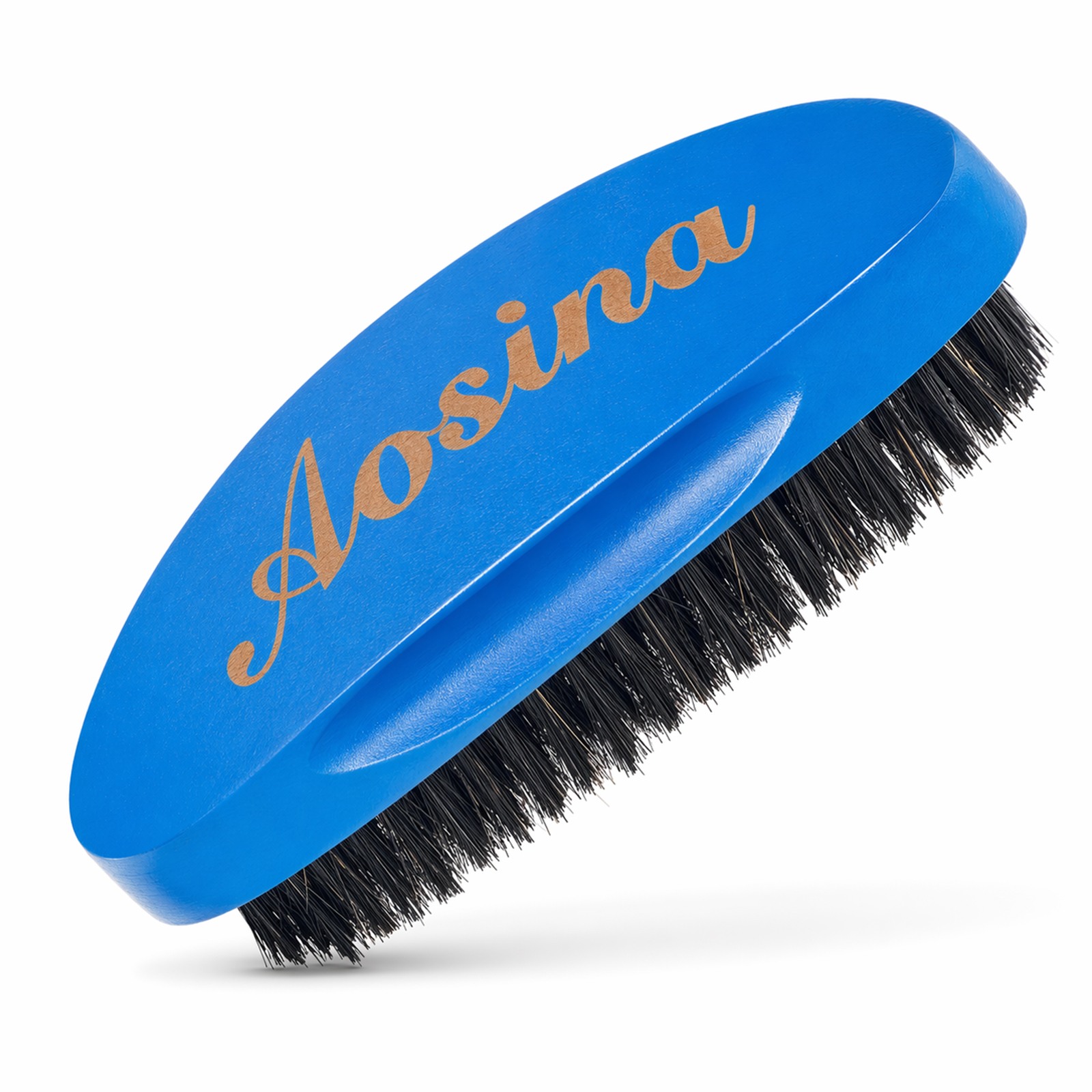
Ask three people which wave brush to buy and you will get three different answers, and most of that disagreement comes from one overlooked variable: how long their hair is right now. A brush that feels useless on a one-week fresh cut can feel too aggressive eight weeks later, on exactly the same head. Firmness is not a personality trait you pick once - it is a match between your bristles and the length of hair you are training. This page walks through the three length bands most wavers work through, what each one needs from a brush, and a simple contact test you can run in the mirror to check whether your current brush still fits.
Why length decides firmness more than anything else
A wave brush trains hair by making contact: bristles have to reach down to the scalp, catch the hair near its root, and carry it along your pattern. When hair is very short, a stiff brush does that easily - sometimes too easily, because there is barely anything to catch and a lot of bare scalp in the path. When hair grows longer, soft bristles may bend and slide over the surface without ever reaching the root, and the brush stops doing real work.
That is the whole logic of matching firmness to length. Your hair texture still matters - coarse, thick hair always pushes you toward stiffer bristles at the same length - but length is the dial you are constantly turning, week after week, and texture just shifts where you sit inside each band.
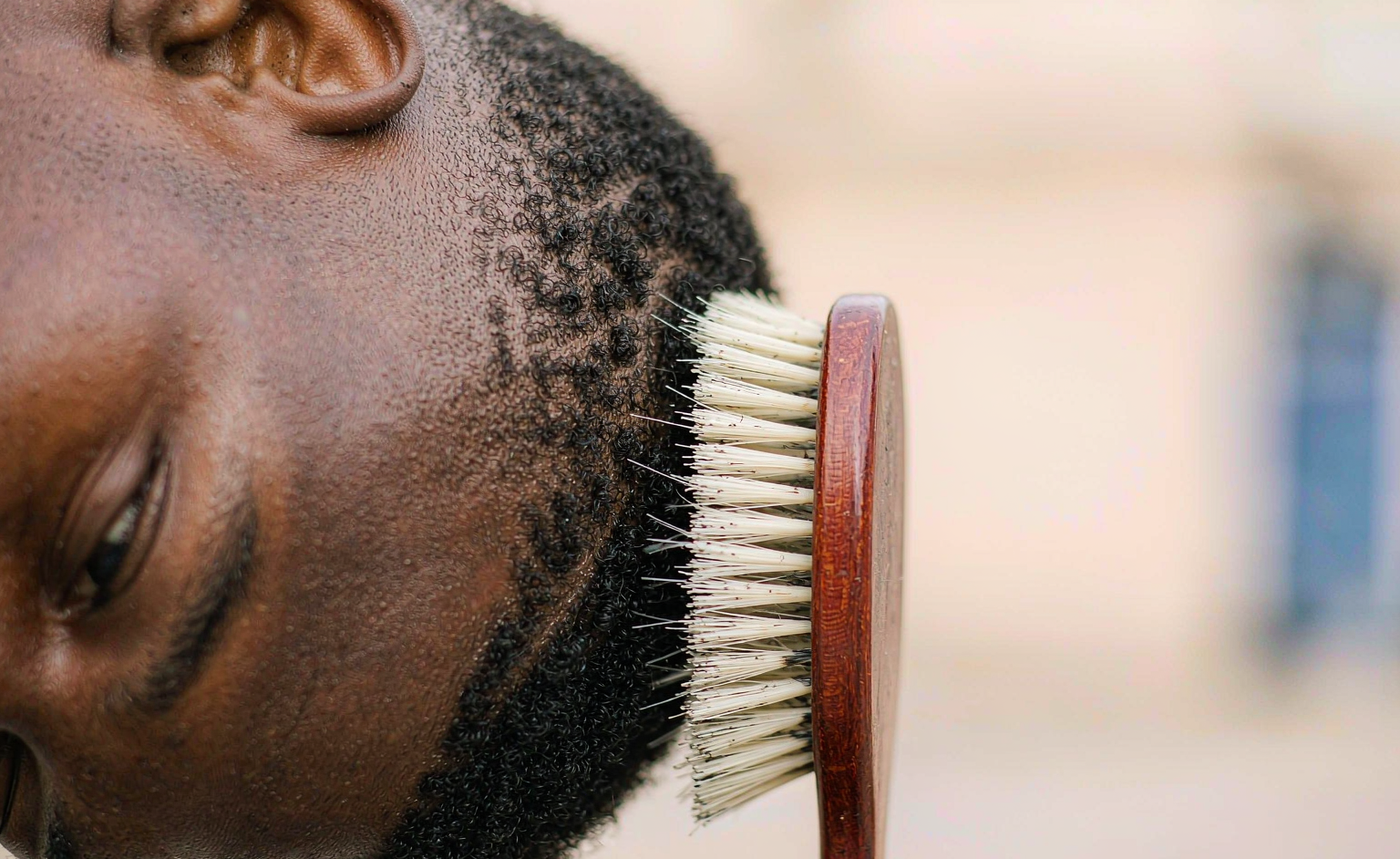
The three length bands at a glance
| Hair length | What the hair needs | Best default firmness |
|---|---|---|
| Up to about 1.5 cm | Gentle laying-down, scalp comfort on a fresh cut | Soft (100% boar) |
| About 1.5 to 3 cm | Real grip plus reach as hair gains weight | Medium Hard (boar-nylon blend) |
| Past 3 cm, wolfing | Penetration through dense, longer growth | Hard (100% nylon), used with light pressure |
These bands are practical ranges, not lab measurements - hair density, texture and cut style all shift the edges. Use them as a starting point, then trust the contact test below over any number.
Up to about 1.5 cm: the fresh-cut zone
Right after a cut, hair is short, the scalp is a little tender from clippers, and the waves you already built are sitting close to the skin. What this stage needs is a brush that lays hair down flat and spreads natural oils without scratching. An all-boar soft brush is the right default here: pure boar bristles have the most give, so they cushion the scalp and still catch very short hair, which barely resists at this length.
The classic mistake is jumping to stiff bristles because a fresh cut feels like a restart and you want to work hard. At this length a hard brush mostly scrapes - the hair is too short to need penetration, and your scalp pays the bill. Give the cut a few days and let the soft brush do the laying down.
See the AOSINA Soft Boar Bristle Wave Brush on Amazon
About 1.5 to 3 cm: the working range
This is where most wavers spend most of their time, and it is the range where a boar-and-nylon blend pulls ahead. Hair now has enough weight that a soft brush can start riding over it, but not so much that an all-nylon brush is justified. A medium hard brush keeps the boar grip and oil-spreading while nylon tips reach down through the extra length, so every pass still catches hair at the root instead of polishing the surface.
If your waves went quiet somewhere in this band - brushing daily but the pattern stopped improving - look at your bristles before your effort. In many cases the routine is fine and the brush simply stopped reaching. The full three-firmness comparison, including where each material earns its slot, is laid out in the pillar guide:
Compare Soft, Medium Hard and Hard wave brushes
See the AOSINA Medium Hard Wave Brush on Amazon
Past 3 cm: wolfing length
Once you are several weeks into a wolf and hair is pushing past roughly three centimeters, the physics change again. Dense, longer hair absorbs the reach of a blend, and a medium brush may feel like it is gliding even with good pressure. That is the signal for a 100% nylon hard brush - the stiffest bristles get through the mass to the root.
The key habit at this length is contact over pressure. Longer hair needs more bristle stiffness, not more force from your arm; leaning harder only adds friction your scalp has to absorb. Keep strokes light and let the nylon do the reaching. When exactly to make the switch, and when to move back down, is covered in the wolfing brush guide:
Best brush for wolfing: which firmness to use and when
The contact self-test, step by step
- Brush one full pass across the top of your head, with the pressure you normally use - no extra push.
- Watch the hair behind the brush: a fitting brush lifts and lays hair in one motion, with visible movement at the root.
- If the hair barely moves and the bristles seem to skim over it, your brush is too soft for your current length.
- If the brush grabs hard, drags, or leaves the scalp feeling raw after a short session, it is stiffer than your length needs.
- Repeat on the sides and back - coarse, denser spots often need one firmness level more than the top does.

Run this test whenever your cut changes or every few weeks during a wolf. It takes a minute and it tells you more than any label on a package.
When your length sits between two bands
One more wrinkle: your bands are not the same all over your head. Hair on the sides and back often grows at a different pace and cuts differently from the top, so the top of your head can sit in the working range while the sides are still in the fresh-cut zone. If that is your situation, matching firmness by region - softer on the shorter areas, stiffer on the denser ones - is a normal and sensible way to brush, not a sign of doing it wrong.
Length grows gradually, so you will spend weeks in the gray area between bands. The honest rule: when in doubt, stay on the softer side one week longer. Moving up too early costs you scalp comfort and buys little, while staying a little soft costs you a slightly less aggressive pass - something you can offset with a few extra minutes of brushing. Let the contact test make the call: the week a normal pass stops lifting hair at the root is the week to move up, not a date on the calendar.
Matching the set to the bands
If you own all three firmnesses, the length bands are essentially the order you reach for them in: soft after a cut and for finishing, medium hard through the working range, hard only once a wolf gets deep. That is also why a three-brush set covers a full cycle better than any single brush - each band gets a tool built for it, and you never have to force one brush to serve three different stages.
A set also solves the between-bands problem for you. Instead of guessing when to commit to one firmness, you keep the blend as your daily driver, add a soft pass on tender days, and keep the hard brush on the shelf until a wolf actually demands it. The extra cost of a set is mostly the cost of not having to make an exact call every week.
See the AOSINA 3-Brush Wave Set on Amazon
Related reading
CHOOSING A BRUSHWhat Is a Medium Hard Wave Brush? Definition and Where It Fits
Medium Hard names a specific construction: boar and nylon bristles blended in one head. This page defines it, explains why the middle ground exists, and shows who it fits.
Read article →CHOOSING A BRUSHBest Wave Brush for Coarse and Thick Hair: What Actually Makes Contact
Coarse and thick hair need contact at the root, not maximum stiffness. How to match firmness, row count and handle shape to coarse, dense hair - and why medium hard starts.
Read article →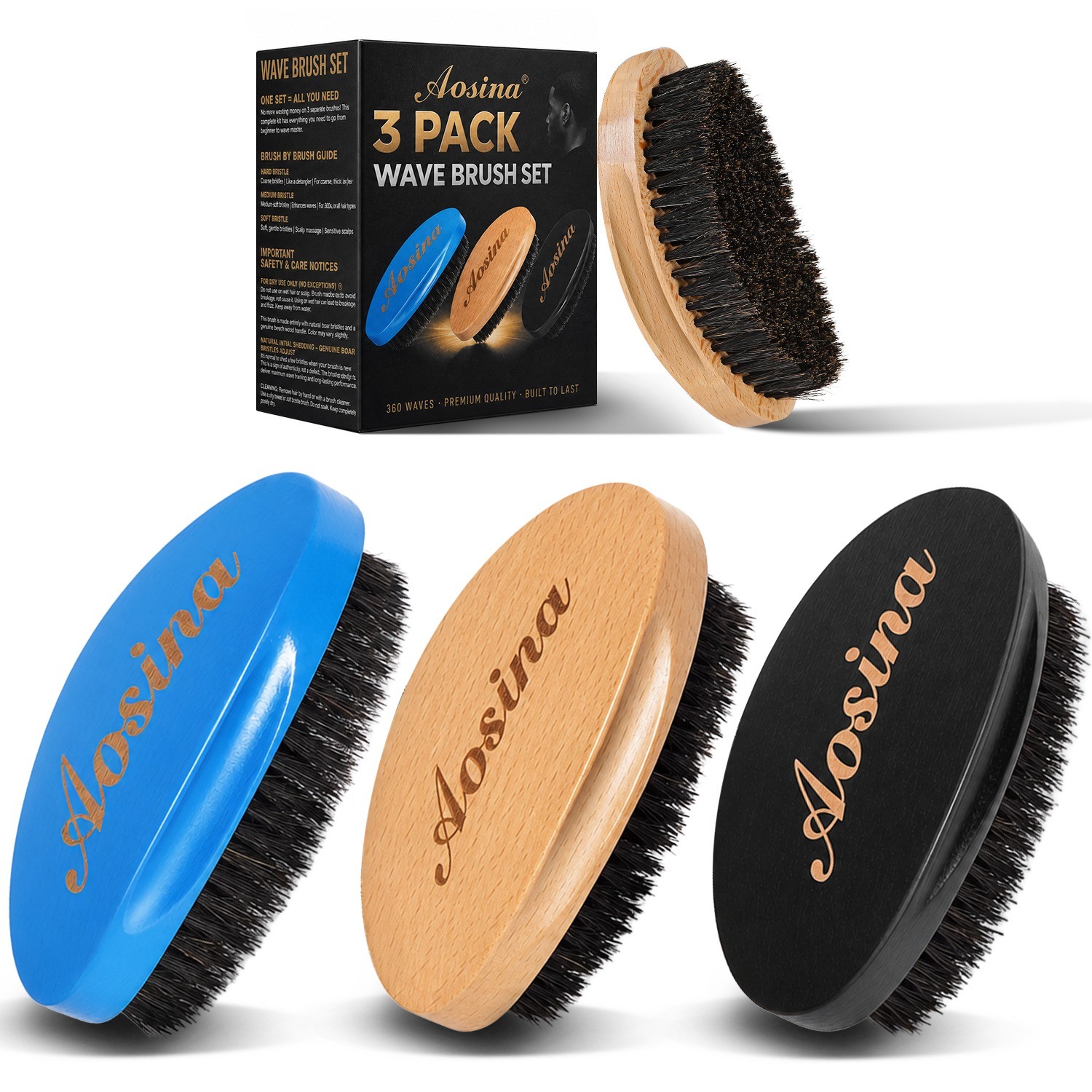 CHOOSING A BRUSH
Best Wave Brush: How to Choose One for Your Hair
Anyone selling you one “best” wave brush is skipping the only question that matters: what does your hair need right now? Here is how to answer it in three steps.
Read article →CHOOSING A BRUSHBest Wave Brush for Black Men: A Firmness Guide
"Best" depends on your hair length today, not on the brand on the handle. Here is how to match firmness to coarse, dense and tightly coiled hair — and what to buy first.
Read article →