Best Wave Brush: How to Choose One for Your Hair
Anyone selling you one “best” wave brush is skipping the only question that matters: what does your hair need right now? Here is how to answer it in three steps.
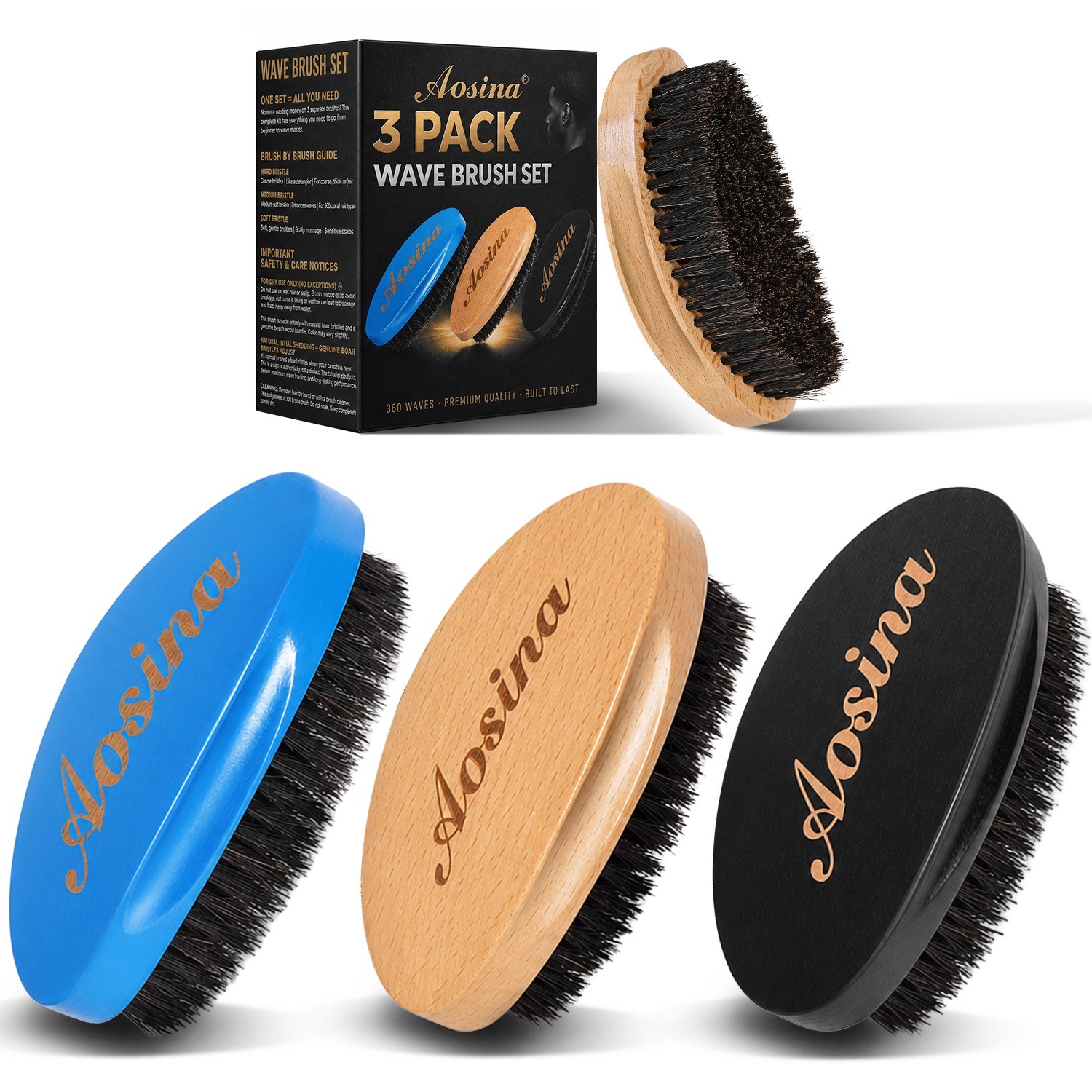
The short answer: there is no single best wave brush, and any page that names one without asking about your hair is guessing. The right brush is the one that matches three things — your current hair length, your hair's density and curl pattern, and which stage of a routine you are in. Get those three right and almost any well-made brush will work. Get them wrong and the most expensive brush on the market will not help.
Here is how to work it out, in order.
Why "best" depends on three things
A wave brush is not a gadget with better and worse versions. It is a tool whose only real variable is how much pull it puts into your hair. Different hair needs different amounts of pull, and the same head needs a different amount at different points in a growth cycle.
So the question "what is the best wave brush?" is really three questions:
1. How long is my hair right now?
2. How dense is it, and how tightly does it coil?
3. Which part of my routine am I buying for?
Answer those and the firmness level picks itself. AOSINA only makes one brush per firmness level for exactly this reason — the range is deliberately small.
the range is deliberately small
Factor 1 — Your hair length
This is the fastest signal, and it changes every few weeks.
| Your hair right now | What it needs | Firmness |
|---|---|---|
| Just cut, close to the scalp | Light contact, comfort | Soft |
| Two to five weeks of growth | More contact to move the hair | Medium Hard |
| Five weeks or more (wolfing) | Reaches through longer hair | Medium Hard or Hard |
| Fresh cut again, mid-wolfing | Reset to light contact | Back to Soft for the first week |
The most common mistake here is buying for the length you hope to reach instead of the length you have. A brush that is too firm for a fresh cut does not accelerate anything — it just creates friction.
Factor 2 — Your density and curl pattern
Curl pattern and density decide how much pull it takes to move your hair at all.
| Hair type | What it needs | Firmness |
|---|---|---|
| Fine, straight to slightly wavy | Bends easily; too much pull causes friction quickly | Soft |
| Medium thickness, wavy | Middle of the range | Medium Hard |
| Thick and coarse | More pull to reach through the hair | Medium Hard |
| 4B / 4C — tightly coiled, dense | The most pull to move at all; also more patience | Medium Hard, moving to Hard with length |
| Straight hair training for waves | Resists holding a bend; moisture matters more than firmness | Soft to Medium Hard + more moisturising |
A note worth making plainly: tighter coils need more pull than fine hair, but they still have a comfort limit. If a hard brush drags, catches or hurts, medium hard is still the better tool — even on 4C. "More pull" has a ceiling.
Factor 3 — Which stage you are buying for
If you brush in more than one pass per session, firmness can change inside a single session.
| Stage | What it is for | Firmness |
|---|---|---|
| Working pass (right after moisturising) | Move the hair into your direction | Medium Hard — Hard for longer, heavier hair |
| Finishing pass (end of session) | Smooth the surface and lay the pattern flat | Soft |
| Overnight | Hold direction while you sleep | Not a brush — a durag or wave cap |
| Wolfing phase | Train through extra length | Medium Hard baseline, Hard for heavier passes |
This is why many wavers use two brushes. Not because they collect them — because one session has two different jobs. Full breakdown: Wave Brush Firmness Guide.
Best wave brush by use case
If you would rather skip straight to a recommendation, this is the honest version — with the reason for each.
| If you are... | Get | Why |
|---|---|---|
| Just starting | Soft | You are almost certainly starting from a fresh cut, and short hair does not need pull. |
| Two to four weeks past a cut | Medium Hard | This is the firmness most people use for the longest stretch of their routine. |
| Wolfing | Medium Hard | Firm enough to reach through length, controllable enough to keep using daily. |
| Thick, coarse or 4C | Medium Hard, then Hard as length grows | Dense hair needs more pull, and the requirement increases with length. |
| Brushing very long, dense growth | Hard | Reaches through hair where lighter brushes glide over the surface. |
| Finishing your sessions like to lay flat | Soft | Surface smoothing is a different job from working the hair. |
| Not sure which you are | The 3-brush set | Feel the difference yourself instead of guessing from a description. |
The four AOSINA brushes are here: Wave Brushes — Soft, Medium Hard, Hard, 3-Pack Set.
Best wave brush for black men and 4C hair
This is one of the most-searched versions of the question, so it deserves a straight answer rather than a marketing one.
The reason the search exists is hair type, not anything else. Most Black men have type 4 hair — 4A, 4B or 4C — which is denser and more tightly coiled than average. That means it needs more pull to move than fine or medium hair, and it holds a deeper pattern once that pattern forms.
So the practical answer is the same framework as above, applied to type 4 hair:
- 4A — usually works well with Medium Hard through most of a growth cycle, with Soft after a fresh cut.
- 4B — Medium Hard as the baseline; Hard becomes useful as length increases.
- 4C — the densest and tightest; expect to use Medium Hard early and move to Hard as the hair grows. It also takes longer to show a pattern, and holds a stronger one once it does.
Two things that matter as much as the brush for type 4 hair:
1. Moisture. Tightly coiled hair loses moisture faster and bends poorly when dry. If your hair feels brittle, no brush firmness will fix that.
2. Patience with timing. Type 4 hair commonly takes longer to show connected waves — often several months rather than several weeks. That is normal, and it is not a sign you bought the wrong brush.
If you are somewhere on this spectrum and unsure, medium hard is the safest single starting point. If you want to cover the whole growth cycle without buying twice, the 3-brush set is the honest recommendation.
Best wave brush for beginners
Two answers, depending on what you would rather do:
- Buy one brush: start with soft. You will almost certainly be starting from a fresh cut, and it will be comfortable while you learn your brushing pattern.
- Buy once: get a set covering soft, medium hard and hard. It costs more up front and saves a second purchase within a month — and it lets you feel the difference instead of guessing.
What you should not do as a beginner is buy the firmest brush available as a shortcut. It does not speed up the process. The routine is what produces waves: see How to Get 360 Waves.
What to look for in the brush itself
Firmness is the decision, but two physical things are worth checking:
- Handle shape. A curved palm shape lets you keep controlled contact around the top, sides, back and crown, where a flat rectangular handle is awkward. All AOSINA brushes use the same curved palm handle.
- Grip comfort. You will hold this for ten to fifteen minutes a day. If it does not sit comfortably in your hand, you will brush less, and consistency is what actually builds waves.
Everything else — packaging, colour, marketing language — has no effect on your hair.
What to ignore when shopping
- Unverifiable bristle claims. If a shop cannot state what the bristles are made of, treat other claims on the same page with caution. We state nylon where a brush uses nylon, and we do not assign a bristle material to brushes where we cannot confirm it.
- "Guaranteed waves in X days." No brush can promise that. Progress depends on your hair, your consistency and your moisture routine.
- "Salon-grade" and similar terms. These are not standardised. They describe nothing you can verify.
- Ranking lists that recommend ten brushes. If a page recommends ten products and all of them are affiliate links, it is a shopping list, not advice.
- Price as a proxy for quality. In this category, a mid-priced brush in the right firmness beats an expensive one in the wrong firmness, every time.
How many brushes do you need?
One, to start. A single brush in the right firmness is enough to run a complete routine.
Two becomes worthwhile when your hair grows through more than one firmness level between cuts, or when you want separate working and finishing passes.
Three is for the case where you want to compare firmness levels and find out what your hair actually responds to — which is what the 3-brush set is for. As we say on the product page: a set is a choice of tools, not a promised outcome.
Where to buy the brushes compared here
AOSINA makes four brushes and sells them on Amazon: soft, medium hard, hard, and a three-brush set containing all three firmness levels.
Buy the AOSINA Soft Wave Brush on Amazon
Buy the AOSINA Medium Hard Wave Brush on Amazon
Buy the AOSINA Hard Wave Brush on Amazon
Buy the AOSINA 3-Pack Wave Brush Set on Amazon
Frequently asked questions
What is the best wave brush overall?
There is no single best one. Match firmness to your hair length and density: soft for fresh cuts and short hair, medium hard for grown-out and thick or coarse hair, hard for long, dense or tightly coiled growth.
What is the best wave brush for beginners?
Soft, because beginners usually start from a fresh cut. If you would rather buy once, a set with all three firmness levels covers a full growth cycle.
What is the best wave brush for 4C hair?
Medium hard as a baseline, moving to hard as the hair gets longer. 4C hair is dense and tightly coiled, so it needs more pull than average — and more patience, because it takes longer to show a pattern.
Do expensive wave brushes work better?
Not inherently. Firmness match matters far more than price. A correct mid-priced brush outperforms an expensive brush in the wrong firmness.
Do I need boar bristles?
Bristle material changes the feel; firmness changes the function. Decide your firmness first, then consider material. Material is not what makes waves form.
How long should a wave brush last?
With regular cleaning and away from standing water — especially on a wooden handle — a well-made brush can last years. See how to clean a wave brush.
Where to go next
Find Your Brush — the firmness chart side by side
Wave Brush Firmness Guide: Soft vs Medium Hard vs Hard