Palm vs. Long-Handle Wave Brushes: Which Shape Fits Your Routine?
A palm brush keeps your grip close to the bristles; a long handle gives you a different reach and wrist position. Here is how to choose by comfort and control, not by promises of faster waves.
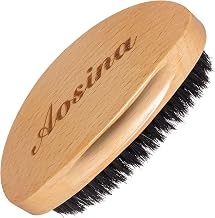
Choose the handle you can hold comfortably while following your brushing angles. A palm brush puts your hand close to the brush head. A long-handle wave brush gives you more distance between your hand and the bristles. Neither shape guarantees better waves, and a long handle does not automatically mean a brush is unsuitable for waves.
Handle shape and firmness are separate choices. Two brushes can have similar bristles but feel different in your hand. Likewise, two palm brushes can feel very different on your hair because their bristle firmness or material differs. Start with a comfortable grip, then choose the firmness that suits your current hair length and comfort.
Compare the grip where you actually brush
Palm grip: Your fingers wrap around or rest over a compact brush body. You may like the close-to-the-head feel when making small angle adjustments around your crown. Check that the width fits your hand and that you can hold it without squeezing hard. A palm shape is not automatically comfortable for every hand.
Long handle: Your hand sits farther from the brush head. You may prefer that grip or find it easier to position your arm when reaching the back. The extra distance can also change how much wrist movement you need. Try the angles you use instead of judging it by handle length alone.
Curved versus flat is another distinction. The curve of the brush head is not the same thing as having a palm grip. Keep light, controlled contact rather than pressing harder to make the entire brush touch at once.
To compare, use clean, dry hands and slow strokes. Check the front, each side, the back and the crown. Notice whether your wrist feels awkward, your fingers slip or you start gripping tightly. Adjust your hold first. If a brush still feels uncomfortable, another shape may suit you better. Stop if brushing hurts; extra pressure is not a fix for an awkward grip.
Choose firmness separately — and keep what already works
AOSINA uses curved wooden palm-style handles. The AOSINA Soft Wave Brush has boar bristles and is an option to consider for gentle finishing or shorter hair when comfortable. The AOSINA Hard Wave Brush uses nylon bristles; it is not a boar-bristle version of the same brush. A familiar handle does not make those two firmness levels interchangeable. Use the buying links below to review each specific product.
Do I need to replace a long-handle brush with a palm brush?
No. If your current brush is in good condition, comfortable and easy to control, there is no need to change it just to match a particular look.
Will a palm brush fix my crown?
Changing the handle cannot replace learning your own growth direction and brushing angles. A comfortable grip can make it easier to practice, but it is not a promise of a particular result.
Which shape is better for a beginner?
Neither is universally better. Pick a grip you can use with light pressure, then pay attention to firmness, your hair length and consistent direction. You do not need both shapes to get started.
What if my hand gets tired?
Pause, relax your grip and shorten the session. Recheck your wrist position instead of pushing through discomfort. If the same grip remains awkward, consider a different size or shape rather than automatically buying a harder brush.
SoftSoft Wave Brush for Fresh Cuts and Short Hair
A soft wave brush with a wooden palm handle — for fresh cuts, short hair and beginner routines. See who it suits and when to move to a firmer brush.
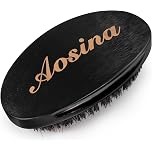 Hard
HardHard Wave Brush for Thick, Coarse and Dense Hair
A hard wave brush with firm nylon bristles for stronger pull on thick, coarse and dense hair. For longer wolfing sessions and advanced wave training.