When Should You Replace Your Wave Brush? Signs to Check First
Check the bristles, handle and feel before replacing your wave brush. Learn how to separate removable buildup, actual damage and a firmness mismatch without following an arbitrary replacement schedule.
Replace your wave brush when damage makes it uncomfortable or unreliable to use, not simply because a certain number of months has passed. Before buying another, remove trapped hair, clean it appropriately and let it dry fully. Buildup can change how a brush feels without meaning that the brush is worn out.
There is no single replacement schedule that fits every wave brush. Use, storage, cleaning and construction all matter. A brush that is still intact, comfortable and easy to control does not need replacing just because you have had it for a while. Slow wave progress alone is not proof that your brush needs to go.
Inspect the brush before your next session
1. Look at the handle and brush body. Check for cracks, splinters, loose sections or edges that catch your hand. Stop using a brush with damage that scratches or makes it difficult to hold securely. Do not cover a sharp edge and keep brushing as if nothing changed.
2. Look through the bristles in good light. Remove loose hairs so you can see the tufts. Broken tips, missing patches or tufts that continue coming loose deserve attention. A few loose hairs caught in a brush are not the same thing as bristles falling out; check what you are actually seeing.
3. Check the shape after cleaning and drying. Bristles that remain badly bent or spread out may no longer give the contact you want. Slight variation in appearance is not, by itself, a reason to discard an otherwise comfortable brush. Do not try to reshape it with heat or chemicals unless the manufacturer specifically recommends that method.
4. Notice the feel during light, controlled strokes. If the brush catches, scratches or requires awkward pressure, stop and inspect it. Do not press harder to compensate. If an intact brush suddenly feels too firm after a haircut, its condition may be fine; your hair length and needs have changed.
Clean, change firmness or replace?
Clean first when the main issue is trapped hair or visible product buildup and the brush has no damage. Follow the care instructions for that particular brush. With a wooden handle, avoid soaking the whole brush, minimize water on the wood and let it dry completely in a ventilated place before storing it. Our wooden-handle cleaning guide below explains the process.
Reconsider firmness when your hair has changed but the brush has not. A fresh cut may call for a gentler option; longer, denser hair may make a different firmness useful. That is a change in your routine, not necessarily a worn-out brush. A comfortable brush in good condition can still have a role later.
Replace when damaged parts, persistently loose tufts or broken bristles make safe, comfortable use doubtful. Choose a replacement for the job you need now instead of automatically going firmer. If you are unsure about a defect or care instructions, contact the seller before trying a repair.
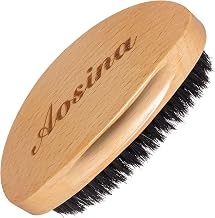
For shorter hair or gentle finishing, the AOSINA Soft Wave Brush is one option to consider if its feel suits you. It has boar bristles and a wooden palm handle. Review the product through the Amazon link below; you do not need to buy a set just to replace one brush.
Common questions about brush replacement
Should I replace my brush every three or six months?
Not automatically. Inspect its condition and follow any product-specific guidance. A calendar reminder can help you remember to check it, but it is not a universal expiration date.
Can cleaning make a damaged brush good again?
Cleaning removes buildup; it does not restore broken bristles, secure loose tufts or fix cracked wood. Inspect again when the brush is dry instead of judging only how it looks immediately after washing.
Does a softer feel mean the brush is worn out?
Not necessarily. Check for buildup, changes in your hair and visible damage before deciding. If it no longer performs the role you need after appropriate cleaning, another brush may be useful, but more pressure is not the answer.
Should I keep an old brush as a finishing brush?
Only if it remains intact, clean and comfortable. A brush with sharp, broken or loose parts is not a good finishing option simply because it feels softer.
How can I avoid unnecessary damage?
Remove trapped hair, follow the brush-specific cleaning guidance, protect wooden handles from soaking and direct heat, and store the brush dry. Avoid packing it where the bristles are crushed. Good care helps preserve condition, but no particular lifespan is promised.
SoftSoft Wave Brush for Fresh Cuts and Short Hair
A soft wave brush with a wooden palm handle — for fresh cuts, short hair and beginner routines. See who it suits and when to move to a firmer brush.