Wave Brush vs Regular Brush: What's the Difference?
A regular brush detangles and styles. A wave brush trains a pattern. Here is what actually differs — bristle density, stiffness, shape and handle — and when a regular brush is fine.
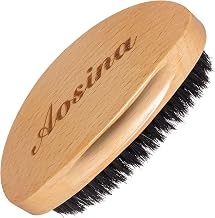
The short answer: a regular hairbrush is built to detangle and style hair at any length. A wave brush is built for one very specific job — pressing short hair into a consistent direction with enough repeated tension that the hair starts to hold a pattern. The visible differences (shorter bristles, denser tufts, a stiffer feel, a palm-shaped handle) all exist to serve that one job.
That means they are not competing tools. If you are trying to build waves, a regular brush will not do the work a wave brush does, and if you just want to detangle longer hair, a wave brush is the wrong tool entirely.
The four differences that actually matter
1. Bristle length. Wave brush bristles are short, so the tips reach the scalp rather than combing through the length of the hair. That is how the brush applies pressure to the hair where it needs to bend — close to the root.
2. Bristle density. Wave brushes pack more bristles into a smaller head. More contact points per stroke means the pressure is spread evenly instead of concentrating on a few strands, which is what makes a long brushing session sustainable instead of painful.
3. Stiffness. A wave brush is firmer than a standard hairbrush, and wave brushes are then graded against each other as soft, medium or hard. Stiffness is what creates pull. A brush that bends away from the hair cannot train it.
4. Handle shape. Most wave brushes use a palm or curved handle so you can keep control while brushing the crown, back and sides — areas you cannot see while you are working. A long handle is easier for detangling long hair; a short, wide grip is better for controlled repeated strokes.
Side by side
| Wave brush | Regular hairbrush | |
|---|---|---|
| Main job | Train a wave pattern with repeated directed strokes | Detangle, smooth and style hair |
| Bristle length | Short — reaches near the scalp | Longer — passes through the hair |
| Bristle density | High — many contact points | Moderate |
| Stiffness | Firm, and graded soft / medium hard / hard | Soft to medium |
| Handle | Palm or curved for control | Long handle or cushioned paddle |
| Best hair length | Short to medium (fresh cut through wolfing) | Any length |
| Works on long hair | Not really — it cannot pass through the length | Yes |
| Builds waves | Yes, with consistency | No — it does not create enough directed tension |
If you only remember one line from this table: a regular brush moves hair out of the way; a wave brush presses hair into place.
Wave brush vs club brush
Club brushes and wave brushes are close cousins. Club brushes are generally larger, with a wider head and a taller, softer bristle profile — the classic barbershop brush for general grooming and finishing. That makes them useful for smoothing and for working on longer hair, but less effective at putting firm, focused pressure into short hair.
If you already own a club brush, it can play the same role a soft wave brush plays in a routine: smoothing the surface at the end of a session. It usually will not replace your working brush.
Wave brush vs military brush
A military brush is typically a long oval brush with firm bristles and a slim handle, designed for tight, orderly grooming rather than for training a pattern. The bristles can be similarly firm, but the head shape and handle are built for a different motion.
In practice, some people find a military brush usable for short-hair laydown, but its long handle and narrow profile make the crown and back harder to work than a palm-shaped wave brush.
Wave brush vs wave cap or durag
These are not alternatives to a brush — they are a different part of the routine. A brush moves the hair. A durag or wave cap holds the direction while you sleep or between sessions, so the hair sets instead of springing back.
You need both. Skipping the compression step is one of the most common reasons progress stalls, even when someone is brushing consistently.
Can you use a regular brush for waves?
You can brush your hair with anything. But you should expect a regular brush to do very little for a wave pattern, for two reasons: the bristles are too long and too soft to put real pressure into short hair, and the head is too wide to work a consistent direction around the crown.
What a regular brush is genuinely useful for during a wave routine: detangling after washing before you start brushing, and general grooming on the days you are not training.
What to buy, and in what order
Start with one brush that matches your hair length, not a collection:
- **Fresh cut, first one to two weeks:** a soft wave brush, so the bristles can make comfortable contact with short hair.
- **Two weeks and beyond:** a medium hard wave brush, which is the working brush most people settle on for training.
- **Long, thick or dense hair where medium hard stops making contact:** a hard wave brush with firm nylon bristles for heavier passes.
- **Not sure, or your length changes a lot between cuts:** a three-brush set covers soft, medium hard and hard in one purchase.
Buy the AOSINA Soft Wave Brush on Amazon
Buy the AOSINA Medium Hard Wave Brush on Amazon
Buy the AOSINA 3-Pack Wave Brush Set on Amazon
See the full firmness comparison on the AOSINA 3-Pack page
Frequently asked questions
Can I use a regular hairbrush to get 360 waves?
You can use it, but it will not create the directed pressure a wave pattern needs. The bristles are too long and soft to reach short hair with any real tension, and the head is too wide for consistent strokes around the crown.
Is a wave brush the same as a club brush?
No. A club brush is generally larger with taller, softer bristles, which suits smoothing and longer hair. A wave brush is shorter and firmer, which suits training short hair into a pattern.
What is the difference between a wave brush and a military brush?
The bristles can be similarly firm, but a military brush usually has a slim handle and a narrow oval head built for orderly grooming. A wave brush uses a palm or curved handle built for controlled strokes on the crown and back.
Do I need a wave brush if I use a durag?
They do different jobs. A durag holds the direction between sessions; a wave brush is what puts the direction in. You need both for the routine to work.
Can a wave brush be used on long hair?
Not usefully. Short bristles cannot pass through length, so a wave brush is best kept to short and medium hair. Use a regular brush or wide-tooth comb for detangling longer hair.
Where to go next
Wave Brush Firmness: Soft vs Medium vs Hard Explained — why firmness matters more than brand.
How to Get 360 Waves: Step-by-Step Beginner's Guide — the routine these tools belong to.