Scalp Pain From Brushing Waves: 4 Causes and When to Stop
Brushing waves should feel like pressure, not pain. The four usual causes of scalp pain from brushing - pressure, brush firmness, the moisture point, and worn bristles - and the moments when the right move is to stop.
Good brushing feels like pressure, not pain
There is a difference between the ache of honest work and pain that tells you something is wrong. Brushing for waves involves real contact: the bristles press the hair down toward the scalp, and over weeks that repeated pressure trains the pattern. A scalp that is getting used to a new routine can feel slightly tender at first, the same way skin feels different after a new exfoliation habit.
What this article is about is the other kind: pain that shows up during the session, soreness that lasts into the next day, or spots that feel angry every time the brush passes over them. That is not the price of progress. It is a signal, and in practice it almost always traces back to one of four causes. None of them are fixed by brushing harder.
Cause 1: The pressure is doing the brush's job
The most common cause is also the simplest. Waves come from repeated direction and compression, and the brush does that work. Your hand supplies light, even pressure so the bristles make good contact - the brush's own weight plus its bristle stiffness carries the rest.
When you lean into the stroke, the extra force does not train the pattern faster. What it does is grind the bristle tips against the scalp itself, and the scalp responds the way skin responds to friction: it gets sore. The tell is location. Pressure pain shows up exactly where you press hardest - most often the crown, because the crown takes the most awkward arm angle, so people compensate with force. If your sessions end with a tender crown but comfortable sides, this is you.
The fix is unglamorous: lighten the hand and let the bristles do the laying down. If your technique itself needs a reset - direction, angles, how to work each section - that is covered step by step in the brushing guide.
How to Brush 360 Waves: Pattern, Angles and Direction
Cause 2: The brush is firmer than your stage
Brush firmness sits on a real ladder. A soft brush uses 100% pure boar bristles, which flex and spread the load across the scalp. A medium hard brush blends boar with nylon for more push. A hard brush is all nylon, and it is genuinely stiff.
The self-inflicted version of scalp pain usually looks like this: someone early in their wave journey, hair short, scalp not used to any of this yet, reaches for the firmest brush they can find because firm sounds like fast. It is not fast. On a scalp that is not conditioned to it, a hard brush just hurts, and the session ends early - which costs you more brushing time than the softer brush ever would.
Where you sit on that ladder depends on your hair texture, length, and how long you have been brushing, so there is no single right answer for everyone. If you are unsure how the middle options differ in practice, the comparison of medium versus medium hard breaks down which stage each one fits.
Medium vs Medium Hard Wave Brush: Which One Fits Your Stage
One more note in the same category: a brand-new brush feels harsher than it will in a month. Boar bristles soften slightly and loosen up with use, so a brand-new brush that feels scratchy is not automatically the wrong brush - it may just not be broken in yet.
How to Break In a New Wave Brush
Cause 3: Brushing hair at the wrong moisture point
Moisture changes how the bristles behave against your head. Both extremes cause problems, and they cause different problems.
On soaking-wet hair, hair is at its most fragile and the scalp is more sensitive, so the same stroke that feels fine on damp hair feels sharp on drenched hair. On completely dry hair - especially dry hair with product buildup on it - the bristles grip and drag instead of glide, and the pulling reads as pain at the root.
The workable zone is in between: hair that is damp but not dripping, or dry hair that has had some moisture put back into it with a leave-in or a light brushing medium. If your scalp hurts most right after a shower, or most at the end of a long dry day, the brush is probably not the variable - the moisture is.
Cause 4: Worn or frayed bristles
Brushes age. Bristle tips split and turn jagged, the tips stop being uniform, and a brush that once glided starts to scratch. Because the change happens gradually, people often blame their scalp or their technique before they blame the brush.
Two signs point here. First, the pain comes with a changed feel - the brush drags or prickles in a way it did not when it was new. Second, the bristle tips look uneven when you hold the brush up to the light. Buildup accelerates this: dried product and skin oils sitting in the bristles make them stiffer and harsher, so a deep clean is worth doing before you retire the brush. But if the tips are genuinely frayed, cleaning only helps so much, and replacement is the honest answer.
How to Clean a Wooden Handle Wave Brush (and Dry It Right)
When to Replace Your Wave Brush: The Honest Signs
When pain is a signal to stop, not push through
Some soreness means adjust. Some means stop. The difference matters, so here is the honest line:
- Stop if the pain is sharp or sudden, not a dull ache.
- Stop if tenderness lasts beyond the next day or gets worse with each session.
- Stop if you see redness, bumps, flaking, or scabbing that was not there before.
- Stop and pay attention if the pain lives in one specific spot instead of being spread out.
Pause brushing the irritated area for a few days and let it settle. A short break will not erase a pattern you have already built - compression from your durag keeps working while you rest, and brushing an already-irritated scalp only sets you back further. If the soreness does not settle within a week of lighter sessions, or if the scalp looks visibly inflamed, that is a dermatologist conversation, not a brush-conversation.
A calmer session that still trains the pattern
None of the fixes above slow your progress down - they make it sustainable, which is the only kind of progress that counts in a routine built on months, not days.
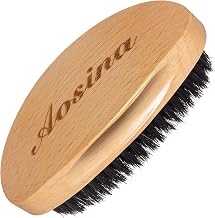
A calmer session looks like this: shorter sessions with light, even pressure instead of long sessions pushing hard. Brush in sections and move through them, so no single patch of scalp takes all the repetitions. Use the soft brush for your long daily passes - the AOSINA Soft, with 100% pure boar bristles, is built for exactly this kind of extended, low-strain work.
AOSINA Soft Wave Brush (100% pure boar bristles)
If you are rebuilding the routine after a pain scare, start every session softer than you think you need and add firmness only when the scalp has clearly adjusted. The firmness ladder exists to be climbed slowly, and the medium hard belongs later in that climb - it is a boar and nylon blend that gives more push, but it rewards a scalp that is ready for it.
Pain-free is not the compromise version of wave brushing. It is the version you can still be doing six months from now.
Related reading
Wave TroubleshootingWhy Do My Waves Look Frizzy After Brushing?
Waves looking puffy after a brush session? Check pressure, firmness, direction and finishing before changing your whole routine.
Read article →Wave TroubleshootingCan You Over-Brush Your Waves? 3 Signs You Are Doing Too Much
Yes, you can over-brush 360 waves. The three signs - stubborn frizz, broken short hairs, and a scalp that stays irritated - what a sensible daily limit looks like, and how to recover when you have overdone it.
Read article →Wave TroubleshootingWaves Fall Apart in Humidity: Why It Happens and What Helps
Moist air softens the set you brushed in and hair drifts back toward its natural curl. Why humidity frizz happens, the order that holds up before you go out, and how to reset when you get home.
Read article →Wave TroubleshootingWaves After the Gym: What to Do in the First 20 Minutes
Sweat softens the set you brushed in and sits at the roots where brushing reaches last. The reset order for the first 20 minutes after a workout, how to handle sweat on non-wash days, and why the post-gym session belongs to a soft brush.
Read article →