Wolfing Weeks 5 to 8: When to Move Up a Brush and When Not To
The middle weeks of a wolf are where it gets built or lost. What changes in week 5, when moving up a firmness actually makes sense, the right way to add pressure, and the three questions to ask at the week-8 checkpoint.
The first four weeks of a wolf are the exciting ones. You commit, you build a routine, and you can watch the pattern tighten week by week. Weeks five through eight are quieter and less flattering, and they are where the wolf is actually decided. This is the stretch where hair gets long enough that anything you skipped starts showing, and where most people either upgrade their approach or quietly drift.
This guide picks up where the weeks-one-to-four breakdown ends. If you have not read that part, the short version: direction from the crown, consistent sessions, and enough durag time are what carry a wolf, and they matter more than any single product.
What actually changes in week 5
Nothing magical happens in week five. What changes is that your hair has been growing the whole time — roughly half an inch a month, a little more or less depending on the person — and by week five there is enough length that it no longer snaps back into place on its own. Hair that used to sit where you brushed it now has weight, and weight pulls the pattern down unless the brushing keeps up.
So the visible change in week five is usually softness at the edges: the sides look less defined than they did in week three, the back fuzzes up faster after the durag comes off, and the crown starts doing its own thing. None of that means the wolf is failing. It means the hair is longer, and longer hair needs more work to look trained.
The practical response is not dramatic. Keep the same session structure, keep every stroke running from the crown outward, and hold the line you built in the first month. The wavers who struggle in weeks five to eight are usually the ones who changed their routine the moment the mirror stopped improving.
Week 6: when a firmer brush earns its place
Somewhere in weeks five to eight, many people move up a firmness, and week six is the most common point. The honest rule: brush firmness follows your hair, not the calendar. A firmer brush is for when your hair has enough length and density that your current brush has to work — or when you find yourself pressing harder just to get through to the scalp.
If your current brush still reaches the scalp in a normal pass and your scalp feels fine, you do not need a firmer one yet. Longer sessions on the right brush beat shorter sessions on a harder one. But if the brush is skating on top of the hair by week six, moving up is reasonable.
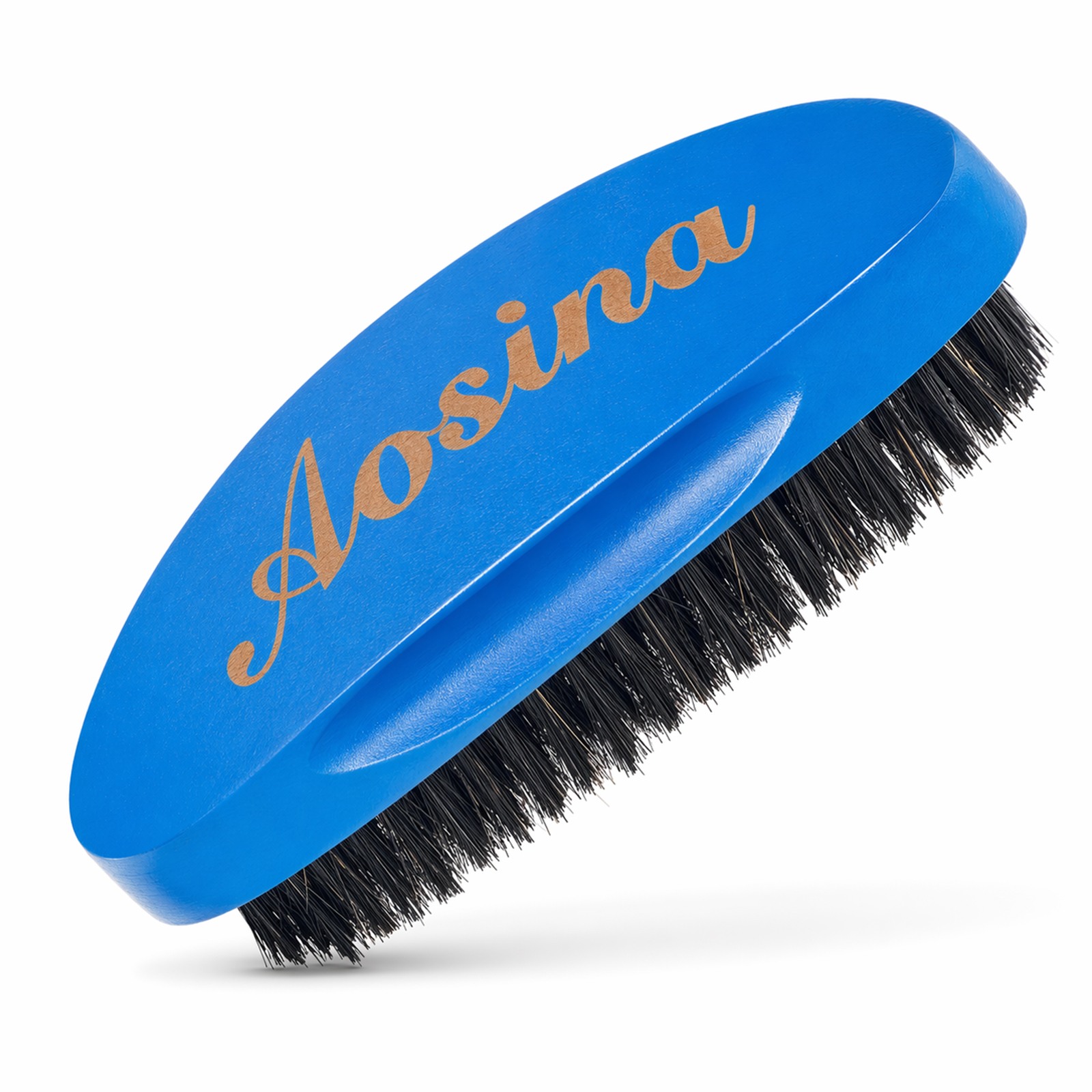
The usual step is from a soft boar brush to a medium hard blend — boar and nylon mixed, firm enough to reach through more hair without the scratch of an all-nylon brush. The fully hard brush, which is all nylon, makes sense for coarse or very dense hair, or for the later stretch of a wolf once the blend no longer reaches. Most people do not need it in week six, and there is no prize for getting there early.
AOSINA Medium Hard Wave Brush (boar and nylon blend)
Soft vs. Medium vs. Hard Wave Brushes: Which One Do You Need? — what each firmness actually does.
Adding pressure the right way (and the wrong way)
Here is the mistake that fills week six with regret: moving to a firmer brush and pressing harder at the same time. Both changes land on the same scalp in the same week, and the usual result is soreness, flaking, and hair that frizzes up instead of lying down.
The right way is one variable at a time. Move to the firmer brush and keep your hand exactly as light as it was — let the bristles do the reaching, because that is what you moved up for. Or, if you are staying on the same brush, add time instead of force. Ten extra minutes at your normal pressure trains more hair than five hard minutes, and your scalp is still there at the end of it.
Pressure is not progress. Contact is progress — every hair touched, in the right direction, often enough that it stays there. If a session leaves your scalp tingling in a bad way, that session took something from tomorrow's sessions, and over a four-week stretch that trade never comes out ahead.
Week 7: the sections that lag
By week seven, most wolves show their honest map: the crown and the back of the head are behind the sides and the front, and they are behind for structural reasons. The crown swirls hair in every direction at once, and the back is the hardest area to see and to reach with a good angle. Length makes both of them worse before it makes them better.
The fix is time and angle, not force. Give the back and the crown their own minutes inside every session instead of whatever is left over at the end, and check your angles — the back needs its own outward stroke direction from the crown, not a continuation of the side strokes. If you cannot see what the back is doing, that is normal; set up a second mirror or brush it by feel and let the durag compress it overnight.
How to Brush 360 Waves: Pattern, Angles and Direction — the angle work the back and crown depend on.
Week 8: hold or finish
Week eight is the checkpoint. Ask three questions, honestly. First: does the pattern hold when you skip a session or two — not perfectly, but recognizably? Second: are the crown and back catching up, or has the gap widened since week five? Third: does your scalp feel like it could take four more weeks, or has it been telling you something?
If the pattern holds and the scalp is healthy, you can finish the wolf with a cut that keeps the trained hair and trims the rest — or extend toward twelve weeks if you want more length and the pattern is still improving. If the crown and back are still far behind, another few weeks of correct brushing usually does more than a haircut will. And if your scalp has been sore for weeks, ending the wolf early is not quitting; it is the better trade.
There is no universal answer here. Hair density, curl pattern, and how consistent the first seven weeks actually were all shape the outcome, and two people doing everything right can land in different places at week eight.
Washing and compression during weeks 5 to 8
Keep the wash rhythm that worked in the first month — for most people that lands around once a week, adjusted for how their scalp actually feels. What changes with length is compression: longer hair has more ways to be wrong overnight, so the durag matters more in week seven than it did in week two. Put it on every night, and if the back keeps coming loose by morning, fix the fit before you blame the brushing.
One neutral note on products: brush, durag, and time do almost all of the work in this stretch. Anything else you add is a detail, and no detail replaces the sessions.
The four ways weeks 5 to 8 go wrong
First, changing two things at once — firmer brush and harder pressure — and losing a week to a sore scalp. Second, chasing week-six frizz with more products instead of more direction. Third, judging the wolf at its worst moment: week six often looks worse than week three because the hair is longer and not yet trained, and comparing it to someone else's week eight is not information. Fourth, skipping sessions and trying to pay it back with one double-length session, which trains the scalp more than the hair.
If you keep one thing from this guide, keep this: the middle weeks reward the same boring routine that got you through week four, plus patience about when to move up. The wolf does not need to be impressive in week six. It needs to be intact.
If you would rather build a brush lineup for the whole cycle instead of buying one at a time, the three-firmness set covers the path from the break-in weeks to the late stretch, including the all-nylon hard brush for when a blend stops reaching.
AOSINA 3-Pack Wave Brush Set (Soft, Medium Hard and Hard)
Related reading
 WOLFING
Wolfing Week by Week: What Weeks 1 to 4 Should Actually Look Like
Wolfing only works if the pattern is being trained while the hair grows. Here is what each of the first four weeks should look like, which brush fits which week, and the four questions to ask at the week-4 checkpoint.
Read article →Wave TroubleshootingCrown Brush Pattern: Why the Swirl Is the Last Section to Close
The crown is where hair direction changes inside one brush width, so normal strokes skip it or fight it. How to find your whirl, the stroke pattern that lays it down, and where to stop.
Read article →BRUSH BASICSCurved vs. Flat Wave Brush: Which Shape Actually Fits Your Head
A curved body and a flat body put pressure on your scalp in different ways. Where each shape helps, where it fights you, and the four checks that tell you in two weeks.
Read article → BRUSH CARE
How to Clean a Wave Brush with a Wooden Handle
Remove loose hair first, keep the wooden handle out of standing water, and let the brush dry in moving air. Avoid soaking or unconfirmed cleaning treatments.
Read article →