Wolfing Week by Week: What Weeks 1 to 4 Should Actually Look Like
Wolfing only works if the pattern is being trained while the hair grows. Here is what each of the first four weeks should look like, which brush fits which week, and the four questions to ask at the week-4 checkpoint.
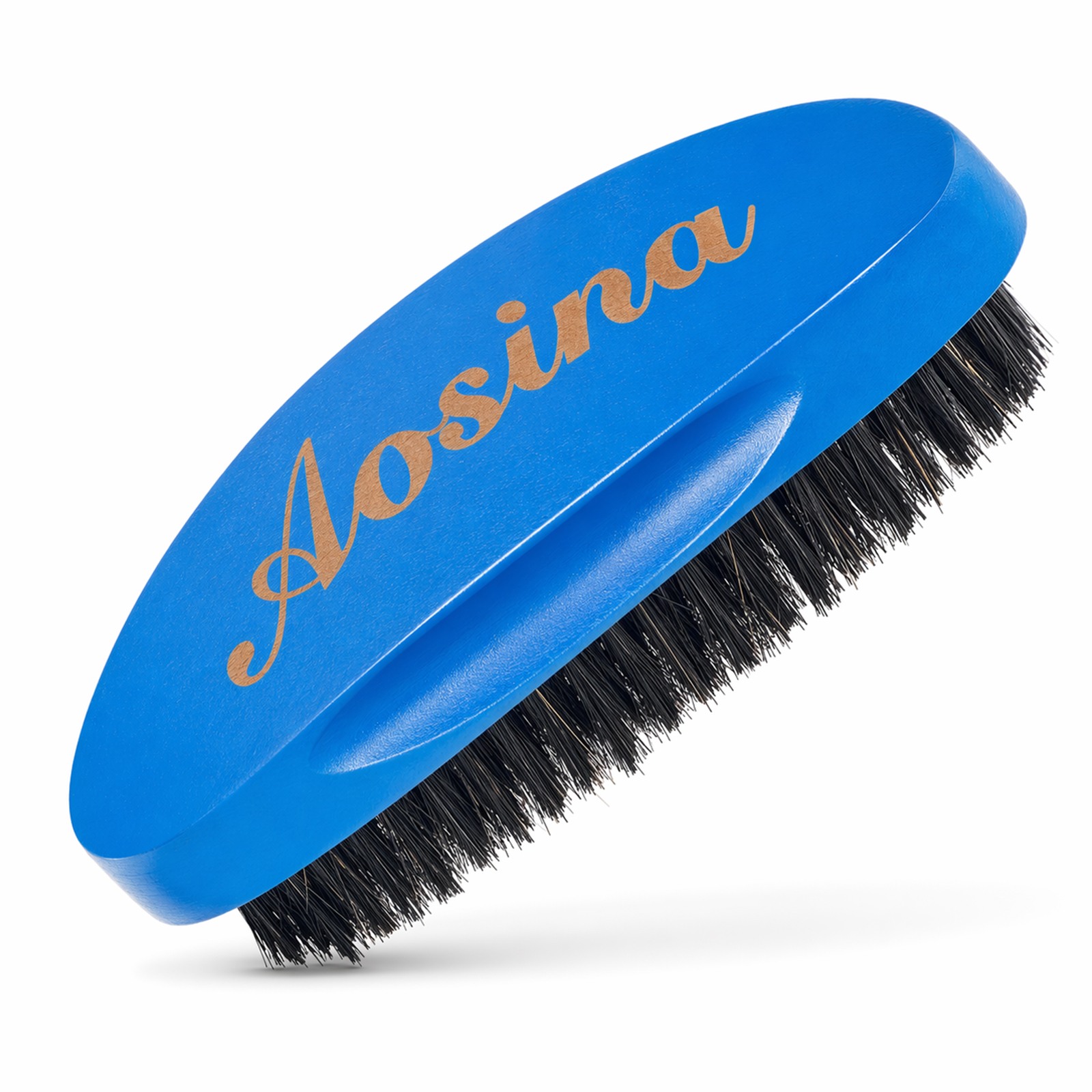
Wolfing is the part of 360 waves that nobody explains properly. It is not a technique you perform, and it is not a product you buy. It is a stretch of weeks where you deliberately do not cut your hair, and keep brushing and compressing it while it grows. That is the whole idea.
Here is what weeks one through four should each look like — brush time, compression, wash rhythm, and the points where most people either build a pattern or lose one.
What wolfing actually is
Your hair needs length before a wave can sit in it. On very short hair the pattern lives almost entirely on the surface, and a single haircut can erase weeks of work. Wolfing gives the hair enough length that the pattern has somewhere to form, and enough time that the direction you have been brushing becomes the direction the hair grows out in.
Most people wolf for four to eight weeks. Hair grows roughly half an inch a month, more or less depending on the person, so four weeks is a modest amount of length and eight is a substantial one.
The mistake that wastes a wolf is treating it as permission to stop working. If you spend four weeks not cutting and not brushing, you end up with length and no pattern, and the haircut that ends the wolf takes you back to the start. Length is only useful if the pattern is being trained while it grows.
The two things you are managing
Across all four weeks there are only two variables worth thinking about.
Direction. Every stroke runs outward from your crown, and each section keeps its own direction the whole way through. A wolf makes direction more important, not less, because longer hair holds whatever shape you give it — including a wrong one. If your strokes wander, you are not just failing to improve the pattern, you are training a worse one.
Compression. The pattern you brush in during the day is held in place while you sleep. That is the job of a durag or a wave cap, and it is the only reason a wolf produces anything you can see in the mirror. Compression does not replace brushing; it preserves what brushing did.
Two smaller variables sit under those. Moisture, because dry hair plus length equals frizz and forks. And pressure, because a longer wolf means more hair between the bristles and the scalp, and hands tend to press harder to compensate.
Week 1: build the habit, not the look
In week one your hair is still close to the length it was after your last cut, so this is the easiest week to brush correctly and the best week to fix your angles. Ten to fifteen minutes a day, split into two sessions if your scalp will tolerate it, is plenty.
The Soft brush is the working tool here. It is 100% pure boar, which gives comfortable contact on short hair and lays the hair down without scraping the scalp. If you are coming off a fresh cut, the scalp is not used to being brushed yet, and a soft head lets you get the reps in without paying for it later.
Wash once in this week, or twice if you are sweating a lot. Compress at night. Do not wear a durag all day in week one: the scalp needs air, and trapping heat and moisture for days is how you end up with an irritated scalp by week three.
What week one should look like at the end: the same pattern you started with, no soreness, and no patch on your head that feels raw. If any of those are off, the session length or the pressure is wrong, and it is cheaper to fix it now than in week four.
Week 2: the first resistance
This is the week the hair starts standing up instead of lying down, and it is the week most people quit. Your waves will often look worse in week two than they did in week one. That is not a sign the method failed. It is the hair growing out of the shape the last cut gave it.
Do not answer that with a harder brush. Answer it with the right amount of structure. When a soft brush starts sliding across the hair instead of moving it, that is the signal to move to the Medium Hard — a boar and nylon blend. The boar carries oil along the hair and smooths the surface; the nylon adds the stiffness to actually push dense hair in a direction. A blend is not a compromise, it is the combination that most people stay on for the middle of a wolf.
Forks usually start showing up around now, especially where two directions meet. The instinct is to scrub across them. Do not. Each side of a fork has its own direction, and the fork closes when both sides are brushed correctly, not when the seam is attacked.
Week 3: density, and the temptation to over-brush
By week three there is enough hair that a session takes longer to reach the scalp, and the temptation is to press harder to make up the difference. That is the point where a wolf stops being productive.
Three signals that you are over-brushing: your scalp is tender or pink afterwards, there is noticeably more hair in the brush than there was in week one, and your waves look frizzier rather than smoother after a session. Any one of them means the previous session was too long or too firm, not that you need to brush more.
Cut the length before you cut the firmness. Fifteen minutes of controlled strokes in the right directions does more than thirty minutes of hard scrubbing, and it does not cost you the next day.
Wash rhythm can stay at five to seven days. If your scalp itches in between, rinse with water and reapply moisturizer rather than shampooing again — repeated shampooing strips the hair exactly when it needs to be flexible enough to train.
Week 4: the checkpoint
Week four is where you decide whether to keep going or change something. Four questions, answered honestly, will tell you.
Is the pattern visible when your hair is wet and combed down in the direction you brush? Does it hold for a few hours without compression? Are there sections that never showed up — usually the sides or the front? And are forks appearing faster than they are closing?
Pattern holding, no scalp damage: keep going. Most people get more out of six to eight weeks than four, and if that is you, the decisions in weeks five to eight are about when to add firmness, not whether to.
Pattern fading while the length is fine: that is a direction problem, not a length problem. Re-check your angles before you touch your brush choice.
Scalp sore most days: the firmness is too high for where your hair is right now. Drop back one level and finish the wolf comfortably. A firmer brush was never going to speed up the calendar.
One thing to avoid at the week four mark: a shape-up that takes your weakest section down to skin. If your sides are the part that has not come in yet, cutting them short resets exactly the area you were working on.
Which brush fits which week
| Week | What the hair is doing | Brush that fits | Why |
|---|---|---|---|
| 1 | Short, fresh from a cut | Soft (100% pure boar) | Comfortable contact and daily laydown without scraping a scalp that is not used to brushing |
| 2 | Starting to stand up | Soft, moving to Medium Hard (boar and nylon blend) | The blend adds structure once boar alone starts sliding over the hair instead of moving it |
| 3–4 | Dense enough to resist the bristles | Medium Hard | Enough stiffness to push dense hair in a direction and still be used twice a day |
| 3–4, very thick or coarse | Hair pushes back hard | Hard (100% nylon) | Maximum structure, but only worth it if a blend genuinely cannot move the hair |
Two honest caveats on that table. A firmer brush is not a faster brush — it changes how much control you have, not how quickly hair changes. And if you are not sure which level your hair will accept, buying the three together costs less than guessing twice.
If you want the one most people use for the middle of a wolf:
AOSINA Medium Hard Wave Brush (boar and nylon blend)
If your scalp is still adapting and you want the gentlest start:
AOSINA Soft Wave Brush (100% pure boar)
If you would rather not guess at all:
AOSINA 3-Pack Wave Brush Set (Soft, Medium Hard and Hard)
Habits that waste a wolf
- Cutting "just the sides" partway through. The sides are usually the slowest section, and taking them down resets them.
- Wearing a durag around the clock. Compression at night is the point. All day traps moisture and heat and irritates the scalp you need healthy.
- Adding pomade or grease every day to force hold. Build-up weighs the hair down and makes it harder to train. Use it sparingly, and wash it out on schedule.
- Brushing harder instead of brushing better. Pressure is not a substitute for direction and repetition.
- Changing your pattern every week. A wolf is a test of consistency. If the direction changes, nothing accumulates.
- Judging the wolf at day ten. Week two looks worse than week one for almost everyone.
Frequently asked questions
How long should a wolf last?
Four to eight weeks for most people. The useful end point is not a date on the calendar but the point where the hair is long enough that it stops holding the pattern, or where daily brushing becomes uncomfortable. Ending at six weeks with a clean pattern beats dragging it to eight and losing it.
Do I need a hard brush to wolf?
No. Firmness is about how much control you have over dense hair, not about speed. Plenty of people finish a whole wolf on a blend. A hard brush, which is 100% nylon, is worth adding when a blend genuinely cannot move your hair in the direction you want.
Can I wolf with very short hair?
You can start, but the first week will mostly be about habit rather than visible progress. The pattern gets easier to see as the hair gains length, and that takes weeks rather than days. Judge the routine by whether you are hitting the direction every session, not by the mirror in week one.
Should I wash my hair during a wolf?
Yes, roughly every five to seven days. Not washing leaves oil and product in the hair, which makes it heavier and harder to train. Avoid washing daily — it strips the hair of the flexibility you need while you are changing its shape.
Where to go next
Soft vs. Medium vs. Hard Wave Brushes: Which One Do You Need? — what each firmness actually does.
Medium Hard or Hard? Choosing a Wave Brush for Wolfing — the wolfing-specific brush decision.
How to Break In a New Wave Brush — if you bought a brush for this wolf and it feels rough.
How Long Does It Take to Get 360 Waves? — a realistic timeline, wolfing included.
Related reading
 WOLFING
Wolfing Weeks 5 to 8: When to Move Up a Brush and When Not To
The middle weeks of a wolf are where it gets built or lost. What changes in week 5, when moving up a firmness actually makes sense, the right way to add pressure, and the three questions to ask at the week-8 checkpoint.
Read article →Wave TroubleshootingCrown Brush Pattern: Why the Swirl Is the Last Section to Close
The crown is where hair direction changes inside one brush width, so normal strokes skip it or fight it. How to find your whirl, the stroke pattern that lays it down, and where to stop.
Read article →BRUSH BASICSCurved vs. Flat Wave Brush: Which Shape Actually Fits Your Head
A curved body and a flat body put pressure on your scalp in different ways. Where each shape helps, where it fights you, and the four checks that tell you in two weeks.
Read article → BRUSH CARE
How to Clean a Wave Brush with a Wooden Handle
Remove loose hair first, keep the wooden handle out of standing water, and let the brush dry in moving air. Avoid soaking or unconfirmed cleaning treatments.
Read article →