How to Get 360 Waves With Straight Hair: What Actually Works
Straight hair is the hardest texture to wave because there is no curl memory to work with. You can still train a pattern — it just leans on compression and moisture more than pull. Here is the honest routine.
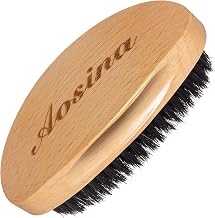
The short answer: straight hair has no curl memory of its own, which makes it the hardest texture to wave — harder than tightly coiled hair, because in straight hair nothing holds a bend for you. That does not make it impossible, but it does change the routine: more compression, more moisture, more weeks, and a softer-looking result than the deep patterns you see on type 4 hair. If your hair is very straight and short, the honest answer is that it may not hold a wave at all, and no brush changes that. What a brush changes is how long you can comfortably keep going.
Why straight hair is the hardest texture to wave
Getting waves is not the same as creating curls. You are not turning straight strands into coils — you are setting one direction into the hair and repeating it until the hair stops fighting back.
Straight strands make that harder in three ways:
- The cuticle lies flat and smooth. The hair slides back toward its natural shape instead of keeping a bend, so a set that holds for a week on coily hair can fall out in a day on straight hair.
- Straight hair is often less dense. There is simply less hair for a stroke to push against, so a pattern has less material to build in.
- Water resets straight hair almost completely. A shower, or a night without compression, can undo a week of brushing.
Tightly coiled hair has the opposite problem: it fights the brush and holds a set. That is why the routine below is weighted so differently from a standard 4C routine — more time under compression, less time under a firm brush.
What actually sets a wave
Three inputs do the work, and none of them is a product:
| Input | What it does | What it does not do |
|---|---|---|
| Direction | Every stroke runs the same way, so the hair learns one pattern | Fix a pattern you change from day to day |
| Moisture | Makes the hair soft enough to bend without breaking or frizzing | Create a pattern on its own |
| Compression | Holds the hair in the shape you just brushed while it dries | Replace brushing |
Straight hair usually gets too little of input two and three, and too much of input one for the wrong reason — people brush hard in circles because it feels like work is being done.
The routine that works on straight hair
1. Grow the length first. A wave needs hair long enough to fold over rather than stand up. If your hair is short, the length is the project — brushing harder will not replace it.
2. Damp, do not soak. Mist the hair or use a light moisturizer so it bends without snapping. Drenched hair on a straight texture dries back to its old shape and takes the effort with it.
3. Brush the pattern, crown outward. Every stroke on a section points the same direction, starting at the crown and finishing toward your hairline. Change direction daily and you get frizz instead of a pattern.
4. Compress after every session and every night. For straight hair this is the biggest single lever, and it is the step people skip. A durag, wave cap or wrap is doing the training while you are not brushing.
5. Brush in two short sessions instead of one long one. Straight and fine strands are more likely to feel tender after a long single session, and a sore scalp ends the routine long before your hair gives up.
6. Wash less often, and re-set afterwards. Every wash is a reset, so plan the brush and compression session that follows it rather than washing and sleeping on it.
7. Use the growth phase properly. When the hair gets longer than your usual cut, that is when the pattern has the most material to work in — it is also when people rush to the barber.
Which brush firmness suits straight hair
Firmness is not what creates the pattern. What it decides is how much pull each stroke delivers and how long your scalp tolerates the session — and on straight hair that second part is the one that matters, because your progress comes from consistency over months, not from force.
| Firmness | Bristles | What it feels like on straight hair | Best used for |
|---|---|---|---|
| Soft | 100% pure boar | Fine, flexible contact with light drag | Daily long sessions, finishing passes, tender scalps |
| Medium Hard | Boar and nylon blend | A natural feel with noticeably more pull | Working passes once the hair has length |
| Hard | 100% nylon | Uniform, firm, most pull per stroke | Short, dense or very coarse hair; not the first choice on fine straight hair |
Soft is the natural starting point on straight hair. The boar filaments are finer and taper toward the tip, so they keep contact with the scalp without digging in, which is what lets you actually finish the daily session:
Buy the AOSINA Soft Wave Brush (100% boar bristle) on Amazon
Medium Hard is the step up once there is length to work with. The blended head mixes natural and nylon filaments, so each stroke moves the hair a little further while still feeling closer to a natural head than an all-synthetic one:
Buy the AOSINA Medium Hard Wave Brush (boar and nylon blend) on Amazon
If you do not know yet which your hair will accept, the three brushes are also sold together, with the middle brush in the set named Medium Hard:
Buy the AOSINA 3-Pack Wave Brush Set (Soft, Medium Hard & Hard) on Amazon
Two things worth being straight about. First, a firmer brush does not build a pattern faster — it changes how much work each stroke does and how your scalp feels afterwards, so treat the point where brushing becomes uncomfortable as the limit, not as a milestone. Second, material is a feel-and-durability choice, not a wave choice; if you want the detail on that, it is covered separately.
How long it actually takes
Slower than the guides that promise a month, and slower than it would be on coily hair. The realistic shape of it is: several weeks before you see any movement at all, and months before a pattern reads as waves from a normal distance. Progress will be softer and shallower than type 4 waves, and some people plateau at a brushed-in look. Plateaus are usually a routine problem — a skipped compression habit, daily direction changes, or a wash cycle fighting the set — not a brush problem.
Mistakes that stop straight hair from waving
- Brushing in circles. No single direction means nothing for the hair to learn.
- Skipping compression. On straight hair this is the difference between training and tidying.
- Working on dry hair. Straight strands break and frizz instead of bending.
- Changing direction every session. The pattern has to be the same one every time.
- Chasing firmness. A harder brush on a sore scalp ends the routine, which is the only thing that was going to work.
- Cutting too early. Length is material; a fresh cut removes progress.
- Expecting a promise. Anyone guaranteeing waves on straight hair in a set timeframe is selling something.
Frequently asked questions
Can you get 360 waves with straight hair?
You can train a pattern on straight hair, but expect it to take longer and to look softer than waves on coily hair. Straight strands have no curl memory to hold the set for you, so the routine leans on compression and moisture, and it depends on your own hair rather than on which brush you buy.
Do wave brushes work on straight hair?
Yes, for the part they affect — how much pull each stroke delivers and how your scalp feels while you brush. A brush does not create the pattern; consistent direction, moisture and compression do.
What is the best brush for straight hair waves?
Most people with fine or straight hair do better starting with a softer head and staying consistent than with a firm head they can only tolerate for a few days. If you want to compare a few firmnesses on your own hair instead of guessing, a set is a reasonable way to do it.
Does straight hair need more product to wave?
More moisture, not more product. Straight hair bends when it is soft, and heavy product that sits on the surface tends to weigh the hair down without helping the set. Keep the routine light and repeatable.
Should I brush straight hair wet or dry?
Damp is the useful middle. Bone dry hair frizzes and snaps, and soaked hair dries back to its old shape and takes the work with it.
Where to go next
How to Brush 360 Waves: Pattern, Angles and Direction
How Long Does It Take to Get 360 Waves?
4C Hair Waves: The Complete Brush and Routine Guide
Boar Bristle vs Nylon Wave Brush: Which Do You Need?
Related reading
 Wave Troubleshooting
Crown Brush Pattern: Why the Swirl Is the Last Section to Close
The crown is where hair direction changes inside one brush width, so normal strokes skip it or fight it. How to find your whirl, the stroke pattern that lays it down, and where to stop.
Read article →BRUSH BASICSCurved vs. Flat Wave Brush: Which Shape Actually Fits Your Head
A curved body and a flat body put pressure on your scalp in different ways. Where each shape helps, where it fights you, and the four checks that tell you in two weeks.
Read article →BRUSH CAREHow to Clean a Wave Brush with a Wooden Handle
Remove loose hair first, keep the wooden handle out of standing water, and let the brush dry in moving air. Avoid soaking or unconfirmed cleaning treatments.
Read article →BRUSH BASICS7-Row vs 9-Row Wave Brush: Which One Fits Your Head and Hair
Rows describe how wide a band of hair one stroke covers, nothing more. Who a 7-row brush suits, who a 9-row suits, and the four checks that tell you which one your head and hands actually want.
Read article →